
Why Your Yard Feels “Off” — It’s Usually a Layout Problem, Not a Plant Problem
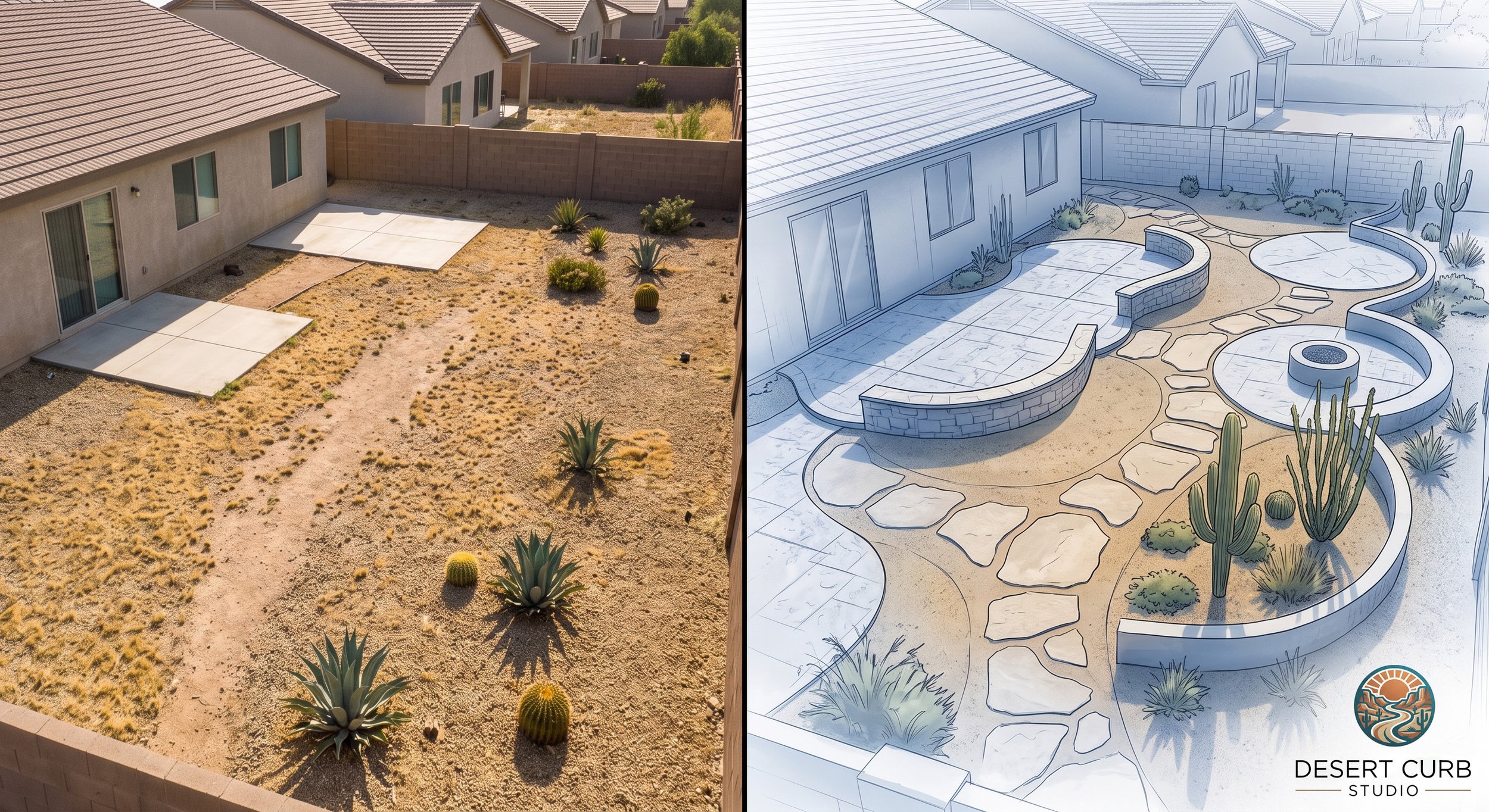
A lot of Valley homeowners look at their yard and think the same thing: something feels off.
Maybe the plants are healthy. Maybe the gravel is fresh. Maybe the turf, pavers, and patio furniture are all technically fine. But when you step back, the yard still doesn’t feel finished.
It might feel scattered. Flat. Empty. Crowded in the wrong places. Or like a collection of features that never quite came together.
Most homeowners assume the fix is to add more plants.
But in Gilbert, Chandler, Mesa, Queen Creek, and San Tan Valley yards, the real problem is rarely the plant list. It’s the layout.
A yard can have good materials and still feel awkward if the space has no structure. Before you spend more on plants, gravel, turf, or another patio upgrade, it’s worth asking a better question: is the yard actually organized well?
1. The Yard Feels Empty Because There’s No Clear Center
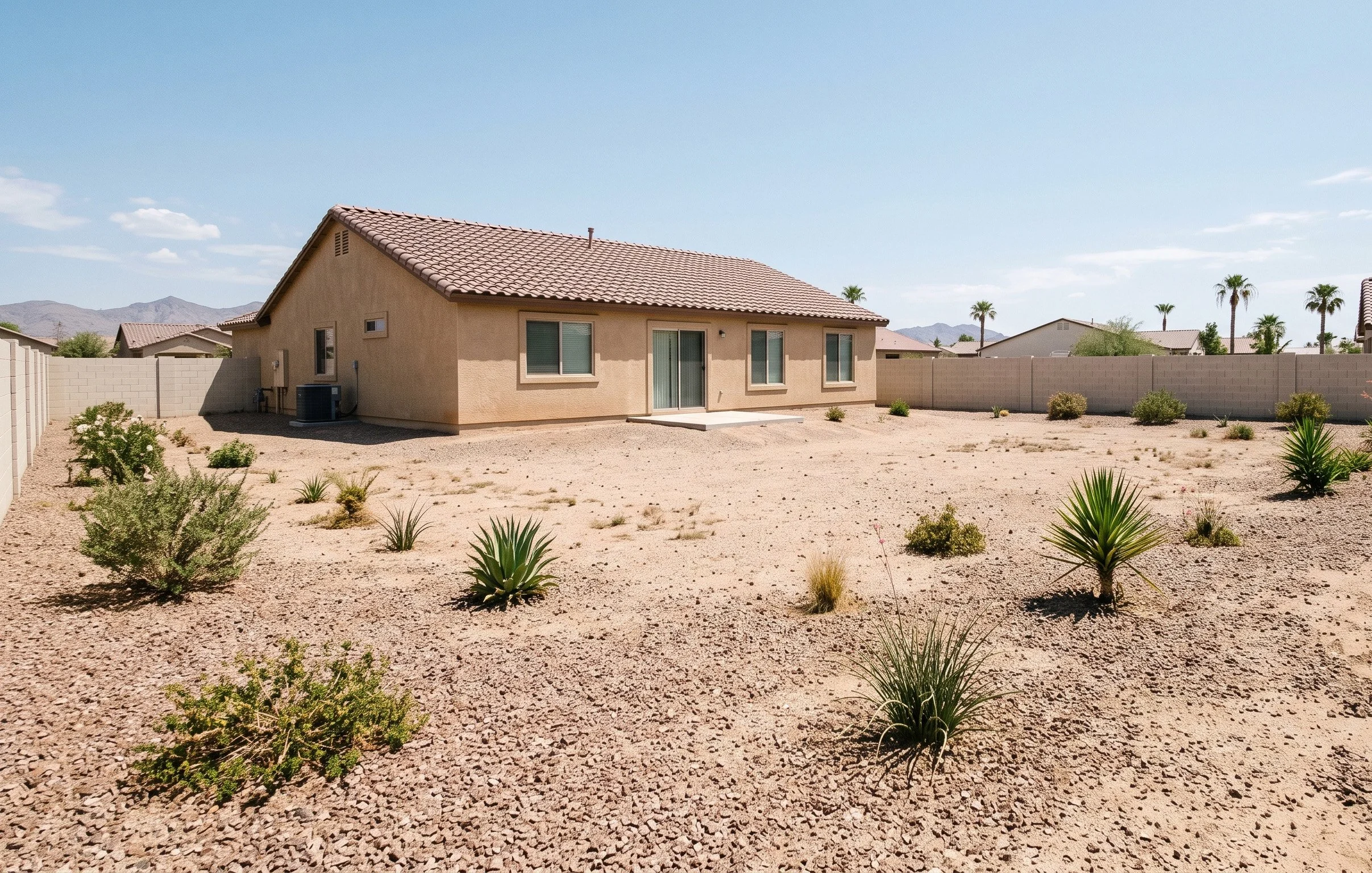
The most common layout problem in East Valley subdivision yards is an undefined center.
Most backyards start as a covered patio, block walls, and a big open dirt or gravel area. As homeowners improve the yard piece by piece, features get added wherever they seem to fit — turf here, a fire pit there, plants around the edges, a grill near the patio.
Nothing is technically wrong, but the yard still feels unfinished because there’s no visual anchor.
It gets even worse when every feature competes for attention. A fire pit, a pergola, a water feature, a raised planter, and a turf area all fighting for equal importance makes a small Gilbert or Chandler lot feel busy and cramped fast.
A strong backyard needs a hierarchy: one primary zone, a secondary feature that supports it, and everything else playing a supporting role.
The primary zone might be the patio lounge. The secondary feature might be a turf panel or fire pit. The supporting pieces might be planting, boulders, lighting, and gravel.
Layout fix: Decide what the yard is mainly for, then let one feature lead and everything else support it instead of every idea competing for the same attention.
2. The Plants Feel Random Because They’re Not Supporting the Layout
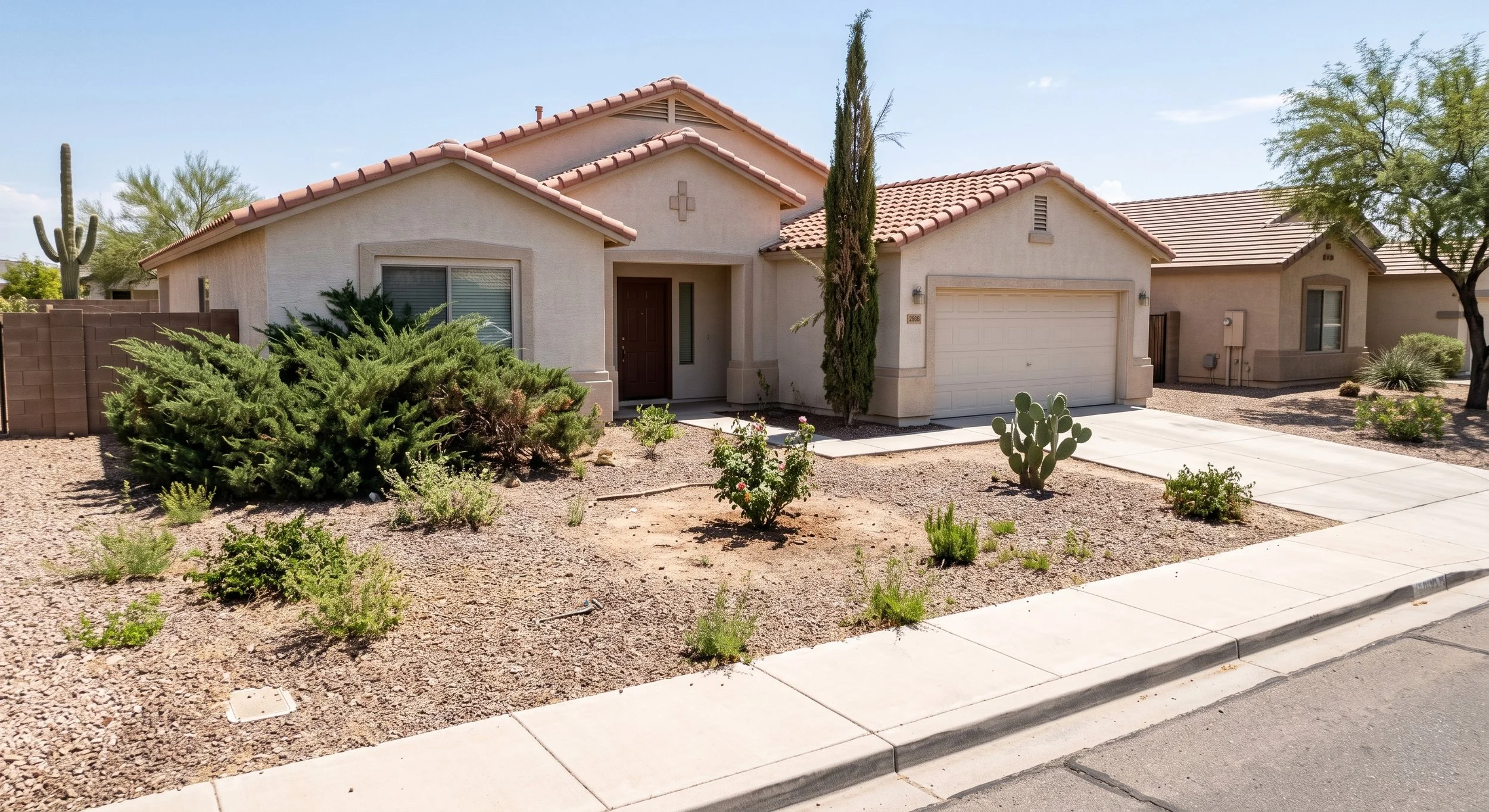
Plants shouldn’t just fill empty spots — they should support the shape and function of the yard.
A common East Valley mistake is placing one of everything along the perimeter: one agave, one Texas sage, one red yucca, a random tree, and a few shrubs spaced evenly along the block wall.
Even if each plant looks fine on its own, the yard reads as scattered rather than composed.
This is why a yard can still feel “off” after a homeowner spends real money at the nursery. The plants aren’t bad — they’re just not arranged to create rhythm or structure.
A better approach uses planting to frame spaces, soften walls, create privacy, and support a focal point: a repeated row of low shrubs to define a turf edge, a cluster of agaves and boulders to anchor a corner, or one desert tree to add height near a seating zone.
Layout fix: Before buying more plants, decide what each planting area is supposed to do — frame a view, soften a wall, create shade, or define a path. Once the purpose is clear, plant choice gets easier.
3. The Yard Feels Flat Because Everything Is the Same Height

A flat yard doesn’t always mean the ground is flat. It usually means the design has no vertical structure.
This shows up constantly in Gilbert, Chandler, and Mesa front yards, where gravel, low shrubs, turf, and young plants all sit close to the ground while the home’s facade towers above them.
The house ends up feeling disconnected from the landscape because nothing bridges the scale between the ground and the architecture.
A strong landscape has layers: low plants in the foreground, medium shrubs and grasses in the middle, and taller trees or vertical accents in the background.
A Desert Museum Palo Verde, Chilean Mesquite, Texas Mountain Laurel, or columnar cactus can break up the flatness without making the space feel crowded.
Layout fix: Add vertical structure intentionally, in the spots where the design actually needs height — not evenly everywhere.
This is exactly the kind of judgment call — where height goes, where it doesn’t — that’s hard to make from a nursery aisle but easy to see in a mapped-out concept. It’s what we walk through together in a Free Discovery Call
4. The Patio Feels Disconnected From the Rest of the Yard

Many East Valley backyards have a covered patio that feels like one space and a yard that feels like another.
This is especially common in new-build homes across Queen Creek, San Tan Valley, Gilbert, and Chandler, where the builder-grade patio is often too small for real outdoor living. There may not be enough room for a dining table, sectional, or grill.
When the patio stops abruptly and the rest of the yard starts as turf, dirt, or scattered plants, the outdoor living area feels patched together rather than complete, even with all the right pieces present.
Layout fix: Treat the patio as the starting point for the entire yard plan. A paver extension, step-out lounge area, or connected walkway ties the covered patio into the rest of the landscape so the transition feels intentional instead of abrupt.
5. The Yard Has Features, But No Flow
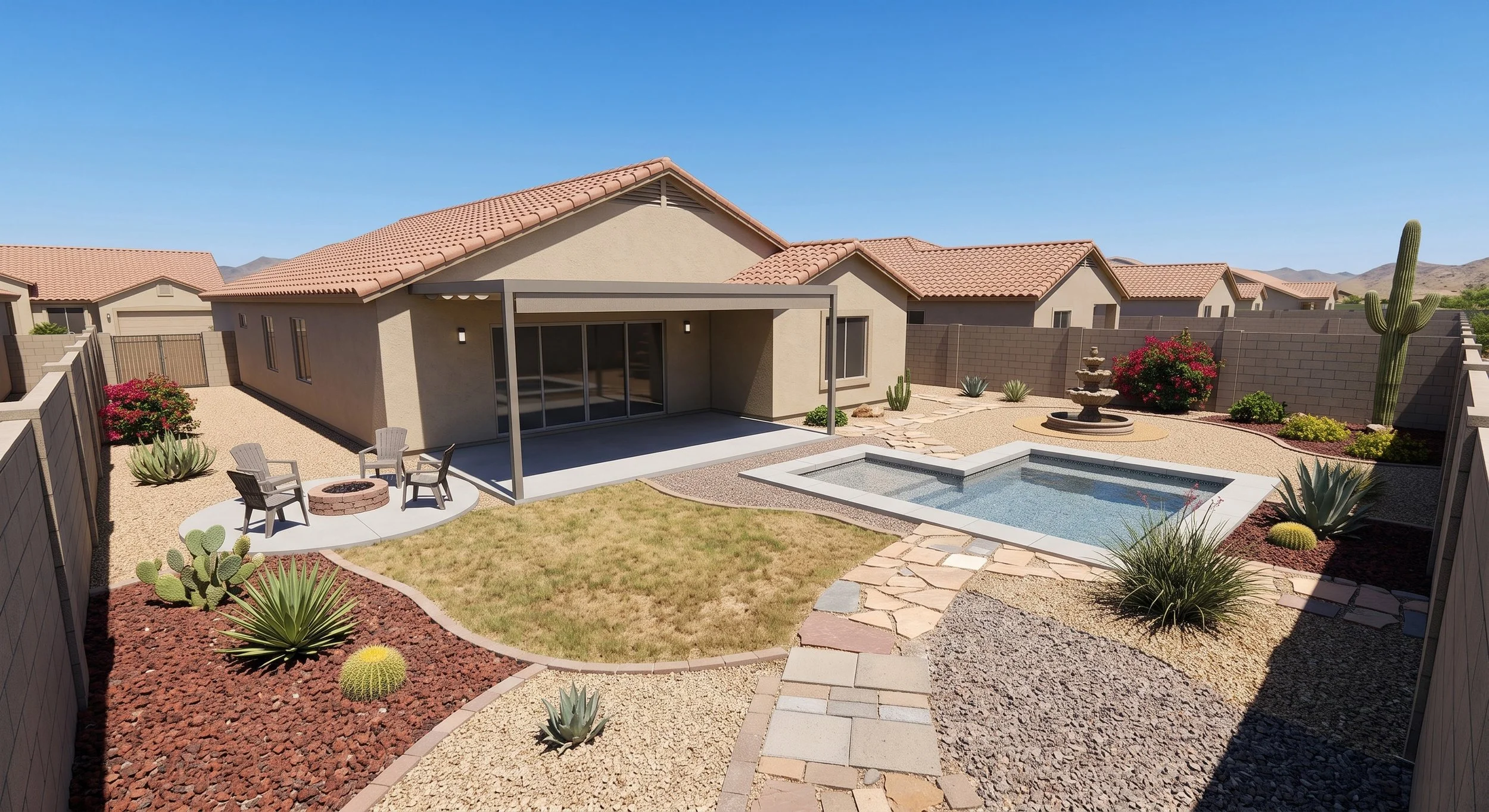
A backyard can have all the right ingredients and still feel awkward if there’s no flow.
Flow is how people move through the space. It is also how the eye moves through the design.
If the fire pit is hard to reach, the grill blocks circulation, or the seating area feels stranded in a corner, the yard can feel off even when every individual feature looks good.
This is worse in long, narrow East Valley lots. A yard that already feels like a corridor gets tighter still with poor circulation.
Flow usually isn’t a formal walkway. It is often just paver spacing, a clean turf edge, or furniture placement that creates a natural sequence: house to patio, patio to main yard, main yard to a destination.
The same logic applies to privacy. A yard boxed in by block walls and close neighbors can still feel exposed unless planting layers soften those hard edges.
Layout fix: Walk the yard and ask, “Where am I supposed to go next?” If the answer isn’t obvious, the layout needs stronger circulation — and likely some planting to soften what’s framing it.
6. The Yard Feels Unfinished Because There’s No Destination
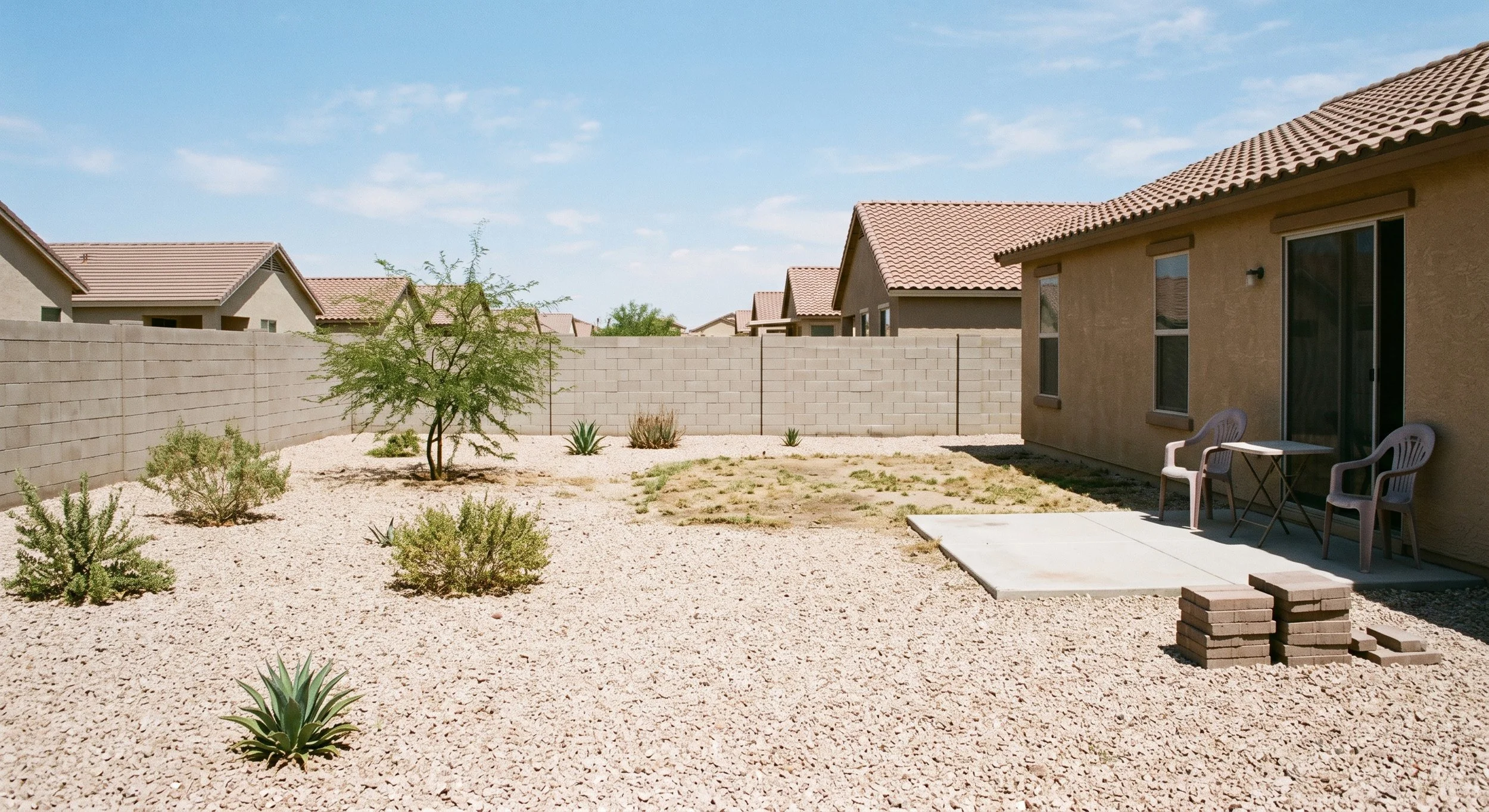
A finished backyard gives people somewhere to go — a shaded lounge, a dining table, a fire pit, a built-in seat wall, or even a specimen tree with planting around it.
Without a destination, the yard feels like space you look at rather than space you actually use.
This is a big reason no-pool backyards can feel incomplete if they’re not planned carefully. Plenty of East Valley homeowners assume a pool is what makes a backyard feel finished.
Often, the real gap isn’t the missing pool. It’s the missing destination zone.
A no-pool yard can absolutely feel complete with the right structure, shade, and a reason to walk to the back of the lot.
Layout fix: Create one clear destination — a small seating area at the back of the yard, a fire pit off the patio, or a shaded dining nook — and give the whole yard a reason to exist beyond turf and gravel.
How to Tell If Your Yard Has a Layout Problem
Your yard may have a layout problem if:
You keep wanting to add more plants, but the yard still feels unfinished
You have turf, pavers, and gravel, but nothing feels cohesive
The patio feels separate from the rest of the backyard
There’s no obvious place to sit, gather, or move toward
The yard feels flat, even with plants installed
You have several features, but they feel random
You’re not sure where to spend money first
If any of those sound familiar, the answer probably isn’t “buy more plants.”
It’s rethinking the layout.
This Is Exactly What We Map Out in a Free Discovery Call
If your yard feels off and you can’t quite explain why, a discovery call can help.
Desert Curb Studio offers a Free Discovery Call for Valley homeowners who want a clearer direction before spending thousands on installation.
In a 15-minute call, we look at your actual yard, your goals, your budget range, and how you want to use the space — then map out a real concept so you can see what the yard could become before committing to materials, contractors, or permanent changes.
The goal is simple: stop guessing, and start with a layout that makes sense.
Final Thoughts
If your yard feels “off,” don’t assume the first fix is more plants.
More plants help — but only once the layout is already working.
Most unfinished-looking yards need structure first: a clear center, defined zones, better flow, layered planting, and a destination.
Once the layout is right, every plant, paver, boulder, and seating area finally has a reason to be there.