
Why Your Yard Looks Flat — and How to Fix It
A lot of Arizona yards have the same problem: they technically have gravel, plants, maybe a few boulders, and a walkway — but the whole space still feels unfinished.
The yard may not look bad, exactly. It just looks flat.
In desert landscape design, a flat yard usually means the space is missing depth, height variation, structure, and focal points. This is especially common in Phoenix-area front yards where the landscape is mostly gravel with a few small plants scattered around.
The good news is that you do not always need a full landscape overhaul to fix it. With the right design moves, even a simple Arizona yard can feel more intentional, layered, and visually complete.
What Makes a Yard Look Flat?
A yard usually looks flat when everything is sitting at the same visual level.
This can happen when the landscape is made up of mostly gravel, small shrubs, low plants, and open empty space. Without taller elements, larger focal points, or clear planting groups, the eye has nowhere to go.
In Arizona yards, this often shows up as:
Large areas of gravel with very little variation
Random plants placed far apart
No trees or vertical accents
No boulders or raised elements
No clear focal point
A weak walkway or entry sequence
Plants that are all similar in size
No contrast between materials, textures, or heights
A flat yard does not always mean the yard is empty. Sometimes a yard can have plenty of plants and still feel flat if the plants are not arranged with purpose.
1. Add Height With Trees and Vertical Accents
One of the fastest ways to make a yard feel less flat is to add vertical height.
In Arizona landscape design, trees and upright accent plants help create structure. They pull the eye upward and give the yard a stronger sense of scale.
Good options for adding height may include:
Palo verde trees
Desert willow trees
Mesquite trees
Shoestring acacia
Tall yucca
Totem pole cactus
Ocotillo
Upright desert spoon
Large agave specimens
A tree near the front entry, driveway, or key corner of the yard can instantly make the landscape feel more established. Vertical accents can also help frame a walkway, anchor a planting bed, or create a stronger focal point near the home.
The key is placement. A tall plant or tree should feel connected to the overall layout, not dropped randomly into the gravel.
2. Use Boulders to Create Natural Structure
Boulders are one of the best tools for Arizona curb appeal because they add weight, texture, and dimension.
A common mistake is placing one lonely boulder in the middle of the yard. That can feel awkward and disconnected. Boulders usually look better when they are grouped together and partially buried so they feel like they belong in the landscape.
To use boulders well:
Group them in odd numbers
Partially bury them for a natural look
Place them near plants instead of isolated in open gravel
Use boulders to anchor corners, curves, or focal areas
Match the boulder color with the gravel and home exterior
Boulders can make a desert yard feel more grounded and intentional. They also create height variation without needing a lot of extra planting.
3. Create Planting Layers
Flat yards often lack layering.
A strong desert planting design usually has a foreground, middle layer, and background layer. This creates depth and makes the yard feel fuller without overcrowding it.
Think of it like this:
Foreground: low plants, groundcovers, small grasses, or compact accents near the front edge
Middle layer: medium shrubs, agaves, desert spoon, or flowering plants
Background layer: trees, tall cacti, larger shrubs, or vertical accents
Instead of spreading plants evenly across the gravel, group them into layered planting beds. This helps the yard feel designed rather than scattered.
For example, a front yard planting area could include a palo verde tree in the background, a few medium agaves and red yucca in the middle, and trailing rosemary or small grasses near the front. That simple layering creates much more depth than using one plant size across the whole yard.
4. Add a Strong Focal Point
If your yard feels flat, it may be missing a moment that catches the eye.
A focal point gives the landscape a clear visual anchor. It tells the eye where to look first.
In an Arizona yard, a focal point could be:
A specimen agave
A boulder grouping
A Palo Verde tree
A large decorative pot
A clean entry walkway
A fire feature
A raised planter
A modern address wall
A cluster of golden barrel cactus
A dramatic accent plant near the front door
The focal point does not need to be expensive. It just needs to feel intentional. A simple boulder grouping with a large agave and low accent planting can completely change the feeling of a front yard.
5. Use Mounding to Break Up the Grade
Many Arizona yards are completely flat from the sidewalk to the house. That can make the landscape feel unfinished, even if the materials are nice.
Subtle mounding can help create movement and depth.
Mounding means slightly raising certain planting areas so the yard has gentle elevation changes. This can make boulders, plants, and accent areas feel more natural. It also helps break up large flat gravel areas.
The goal is not to create steep hills. In most residential yards, subtle is better. A small amount of grade change around a planting bed or boulder grouping can make the design feel much more polished.
6. Repeat Plants Instead of Using One of Everything
A common homeowner mistake is buying one of every plant they like.
One agave. One lantana. One cactus. One grass. One shrub. One random flowering plant.
The result can feel busy but still flat because there is no rhythm or repetition.
Professional-looking landscapes usually repeat plants. Repetition helps the yard feel cohesive and intentional.
Instead of using ten different plant types, try using fewer varieties in stronger groups. For example:
Three to five red yucca along a walkway
A group of three agaves near a boulder cluster
Repeated ornamental grasses along a patio edge
Matching shrubs to frame both sides of an entry
Several golden barrels grouped together for impact
Repetition does not make a yard boring. It makes the design feel organized.
7. Define the Walkway and Entry Sequence
Your walkway should do more than get people from the driveway to the front door. It should guide the entire design.
A weak walkway can make a front yard feel flat because there is no movement or structure. A strong entry sequence creates direction, curb appeal, and a better first impression.
You can improve the walkway experience by:
Adding low planting along the edges
Using lighting to guide the path
Placing accent plants near turns or entries
Framing the front door with balanced planting
Using pavers, concrete, or decomposed granite to create a cleaner route
Adding a focal point near the entry
When the walkway feels intentional, the whole yard feels more designed.
8. Mix Texture, Color, and Form
A flat yard is not always about height alone. Sometimes it feels flat because everything has the same texture.
In Arizona landscapes, gravel can dominate the view. If the plants are also small, dusty, and spread apart, the yard may lack contrast.
To fix this, mix different plant forms and textures:
Spiky agaves
Soft ornamental grasses
Rounded shrubs
Upright cacti
Flowering accents
Large boulders
Fine-textured groundcovers
Smooth modern pavers
Warm gravel or decomposed granite
The contrast between soft, sharp, round, vertical, and spreading forms creates visual interest. This is what makes a desert yard feel layered instead of plain.
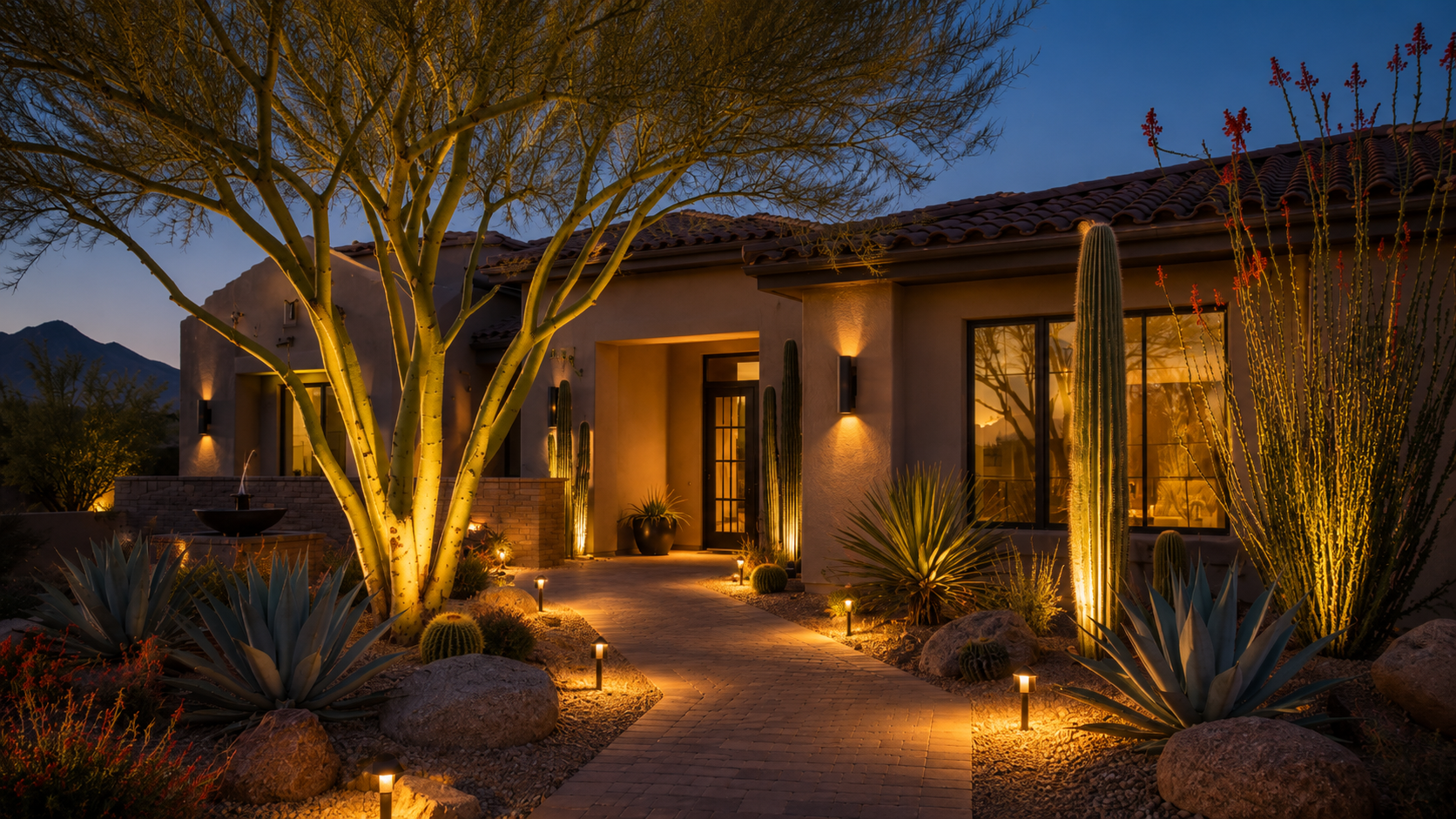
9. Add Lighting for Evening Depth
Landscape lighting can completely change how a yard feels.
During the day, a flat yard may look simple and open. At night, the right lighting can create shadows, highlight trees, and make the landscape feel more dramatic.
Good lighting options include:
Path lights along a walkway
Uplights on trees
Accent lights on boulders
Wall wash lighting near the home
Soft lighting around seating areas
Entry lighting near the front door
Lighting adds depth because it creates contrast. It helps the eye notice forms, shadows, and focal points that may not stand out during the day.
For Arizona homes, twilight curb appeal can be especially powerful because outdoor spaces are often used in the evening when temperatures are more comfortable.
10. Plan the Whole Yard Before Installing One Piece
One of the biggest reasons yards end up looking flat is because they are installed one piece at a time without a clear plan.
A homeowner may add gravel one month, then a few plants later, then turf, then a tree, then pavers. Each choice may be fine on its own, but the yard can still feel disconnected if there was no overall design direction.
Before starting installation, it helps to think through:
Where the focal point should be
How the walkway should guide the space
Which areas need height
Where shade is needed
What plant sizes make sense long-term
How gravel, turf, pavers, and planting areas connect
What the yard should look like from the street
How the front entry should feel
A clear landscape design concept can help you avoid costly guesswork and make better decisions before construction begins.
Final Thoughts: A Flat Yard Usually Needs Design, Not Just More Plants
If your Arizona yard looks flat, the answer is not always to add more plants.
The real solution is better composition.
A strong desert landscape uses height, layering, repetition, boulders, focal points, pathways, lighting, and material contrast to create depth. Even a low-maintenance xeriscape yard can feel rich and intentional when these pieces work together.
If your yard feels unfinished, empty, or scattered, it may just need a stronger design direction.
Desert Curb Studio creates custom Arizona landscape design concepts to help homeowners visualize their yard’s potential before starting installation. Whether you are planning a front yard refresh, backyard upgrade, curb appeal improvement, or full xeriscape transformation, a clear concept can help you see the layout, materials, planting direction, and overall look before committing to the work.