
10 Phoenix Backyard Mistakes That Make Your Yard Hotter
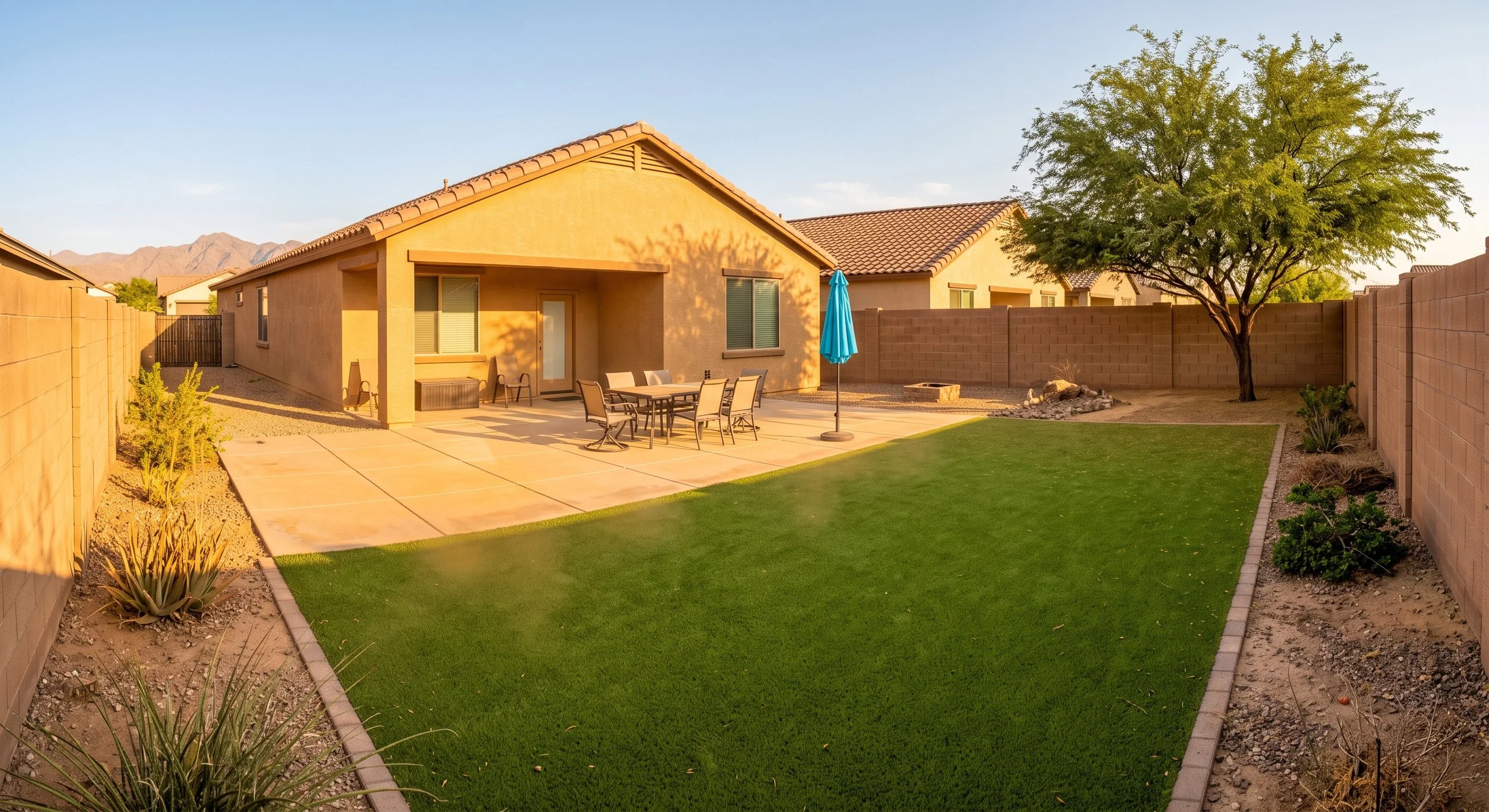
Living in Phoenix means accepting that summer is hot. But that does not mean every backyard has to feel equally brutal.
Two homes on the same street can have outdoor spaces that feel completely different at 5:00 in the afternoon, even when the air temperature is identical.
Why?
Often, it comes down to how the yard was designed.
The amount and placement of shade, the surfaces underneath your feet, where trees are planted, how much exposed hardscape surrounds your seating areas, and even where the patio sits can all influence how comfortable a backyard feels.
The City of Phoenix has made both tree canopy and built shade important parts of its strategy for responding to extreme heat. Research partnerships involving Arizona State University have also studied how shade and outdoor surface materials influence conditions in our desert climate.
So if your backyard feels like somewhere you avoid from May through September, it may not simply be because you live in Arizona.
Some of the problem might be the yard itself.
Here are 10 common Phoenix backyard design mistakes that can make an already hot landscape feel even hotter, along with ways to approach them differently.
Quick Answer: What Makes a Phoenix Backyard Feel Hotter?
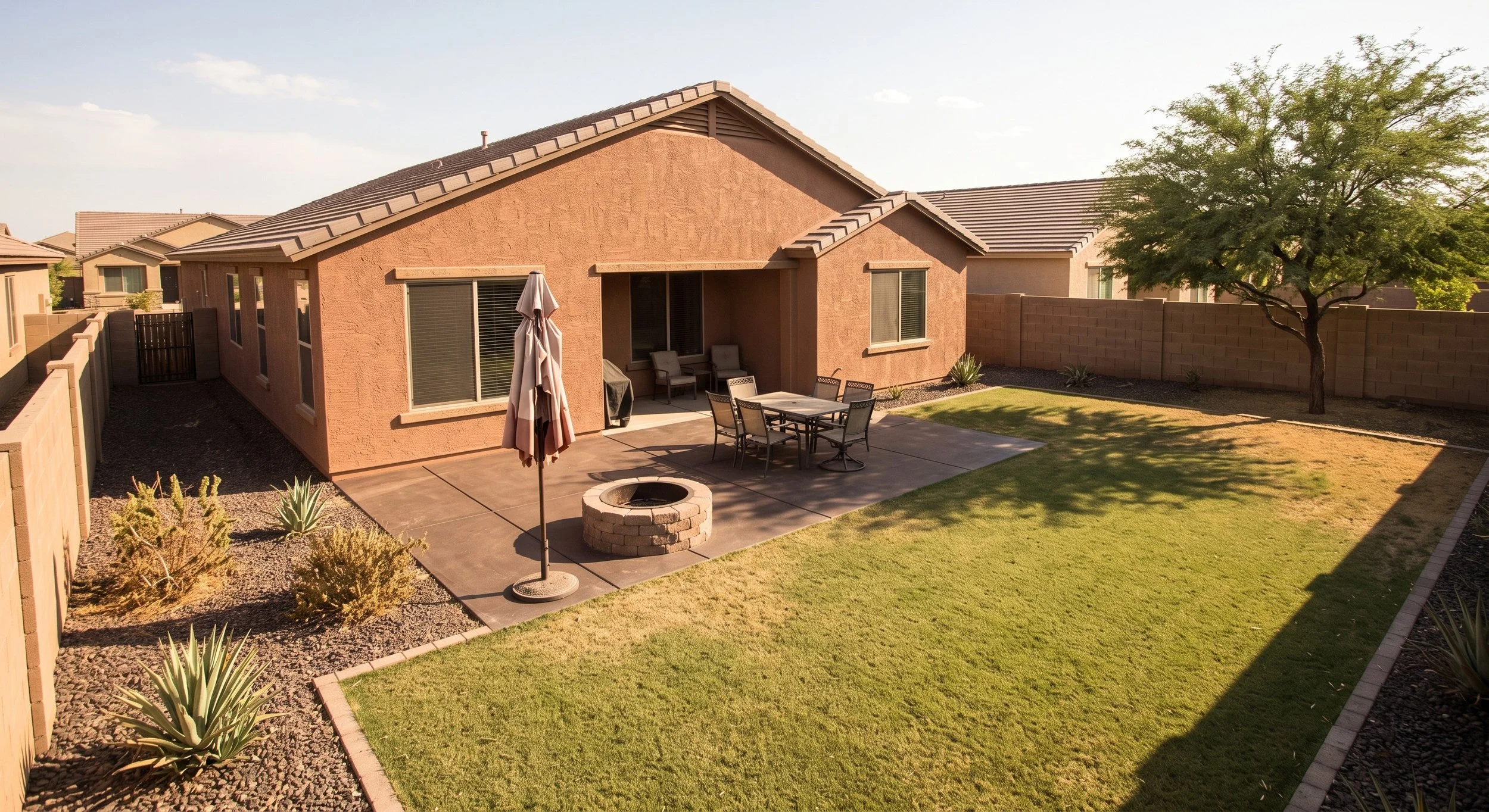
The biggest problems usually come down to some combination of:
Too much exposed hardscape
Not enough shade
Shade placed in the wrong location
Large areas of unshaded artificial turf
Poor tree placement
Heat absorbing walls surrounding seating areas
Outdoor living spaces sitting in direct afternoon sun
Too little planting around gathering spaces
Designing for how the yard feels in January instead of July
Treating shade as an afterthought instead of part of the layout
The good news is that many of these are design and layout problems, not problems that automatically require adding more expensive features.
Sometimes the biggest improvement comes from reconsidering where things go rather than simply adding more to the yard.
1. Covering Too Much of the Backyard With Unshaded Hardscape
A large patio sounds appealing.
More room for furniture.
More space for entertaining.
Less landscape to maintain.
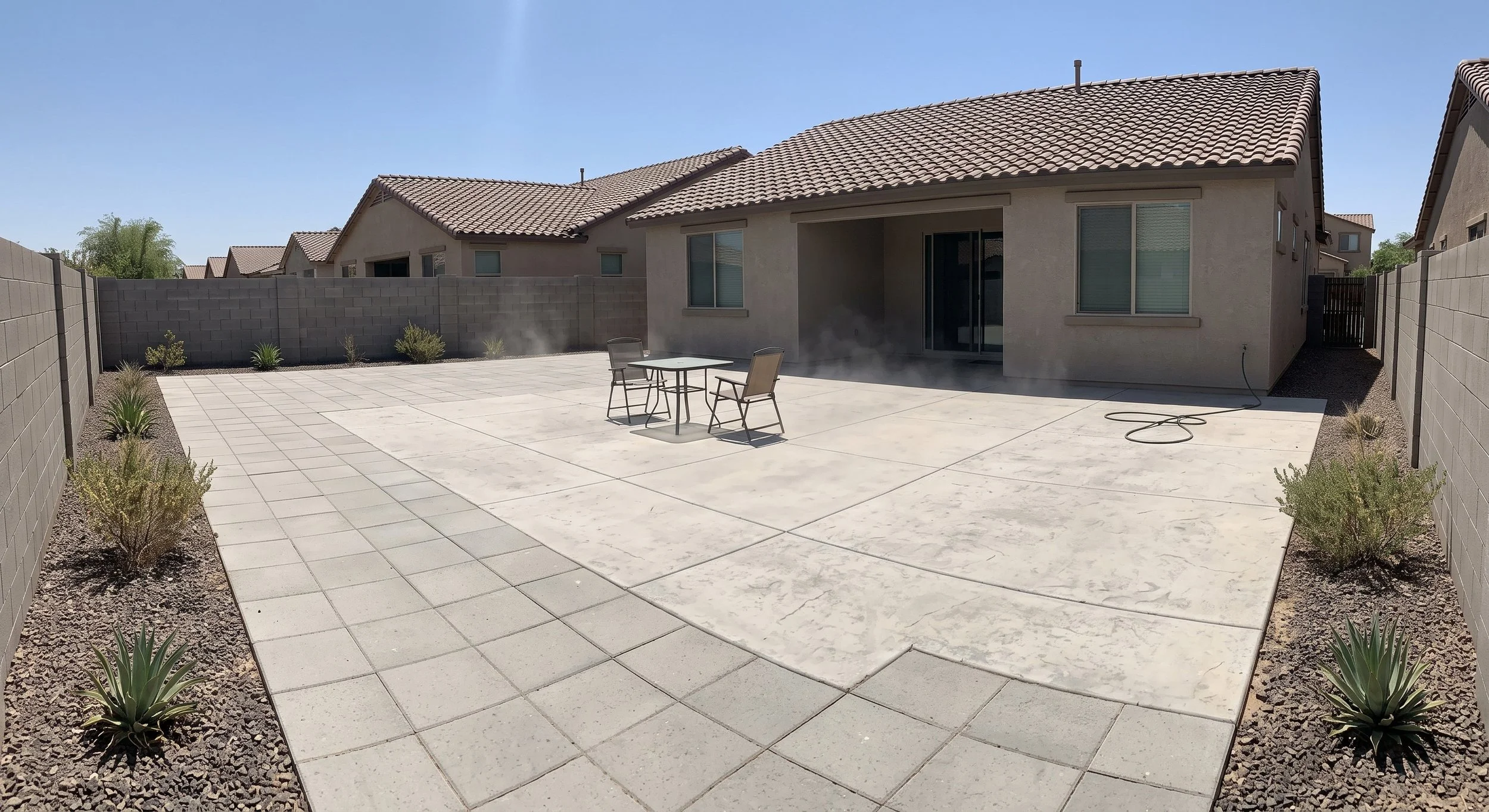
But in Phoenix, there is a real difference between usable hardscape and simply paving the yard.
Concrete, pavers, masonry, and other exposed surfaces absorb solar energy throughout the day and can remain warm well into the evening, particularly when they sit in direct sun without relief from shade or planting.
That does not make hardscape bad.
Hardscape is what makes patios, dining areas, walkways, outdoor kitchens, and gathering spaces possible.
The mistake is creating large paved areas that are not serving a real purpose.
A Better Approach
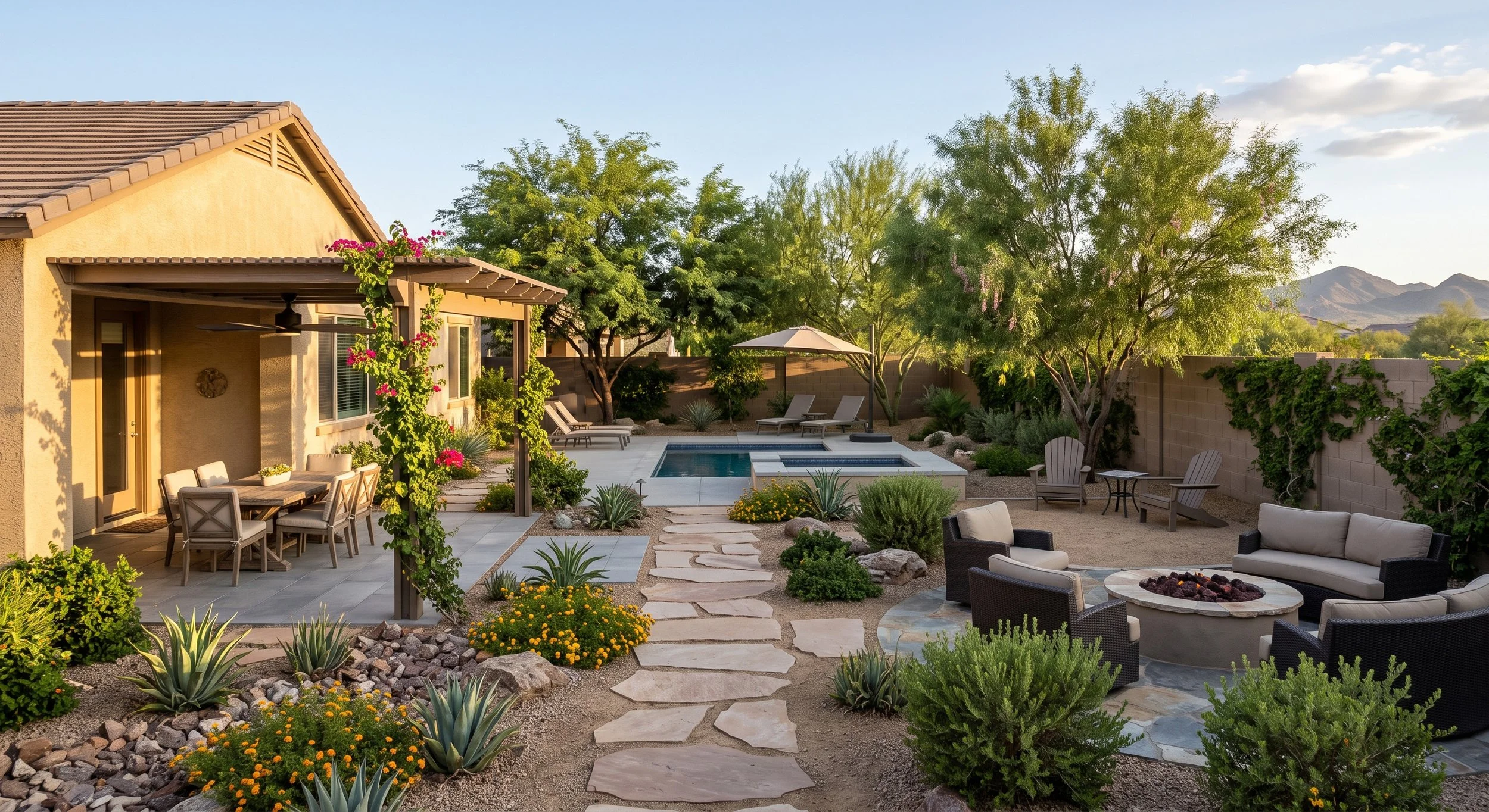
Size the hardscape around what you actually need.
Instead of paving nearly the entire yard, define specific spaces such as:
A dining terrace
A pathway
A fire lounge
A pool deck
A seating area
Then allow planting, trees, gravel areas, and other landscape elements to create separation between them.
More paving does not automatically mean more usable space.
Especially when nobody wants to stand on it in July.
2. Treating Shade as Something You Will Add Later
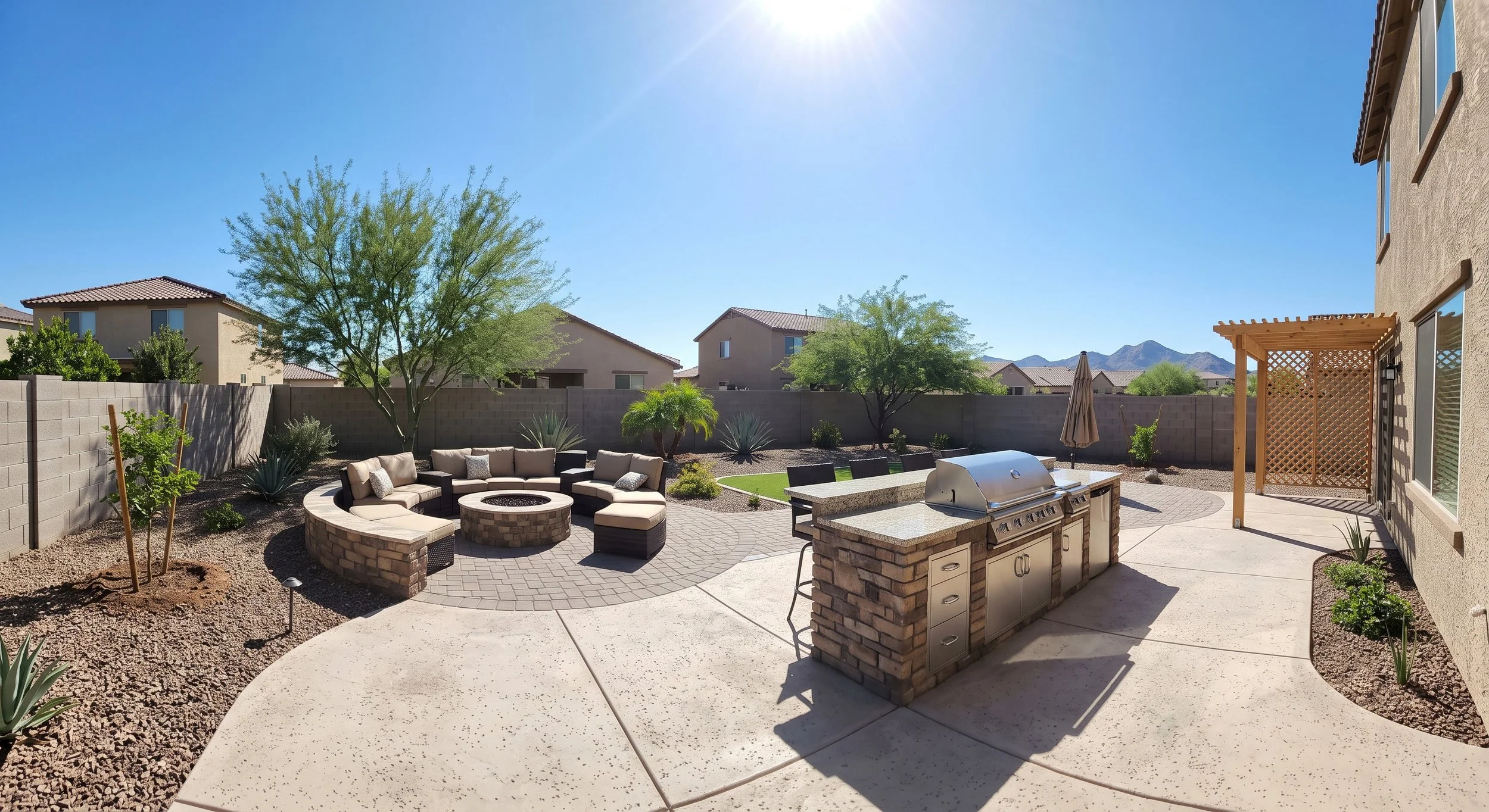
This might be the single biggest mistake in a Phoenix backyard.
People design the patio first.
Then the outdoor kitchen.
Then the fire pit.
Then the planting.
Eventually, someone asks:
Where should the shade go?
In Phoenix, it often makes more sense to think about shade much earlier.
Shade is not decoration.
It is part of the infrastructure of an outdoor space.
That is one reason the City of Phoenix has placed increasing emphasis on both tree canopy and built shade as tools for responding to extreme heat.
A Better Approach
Ask early:
Where will people actually need protection from the sun?
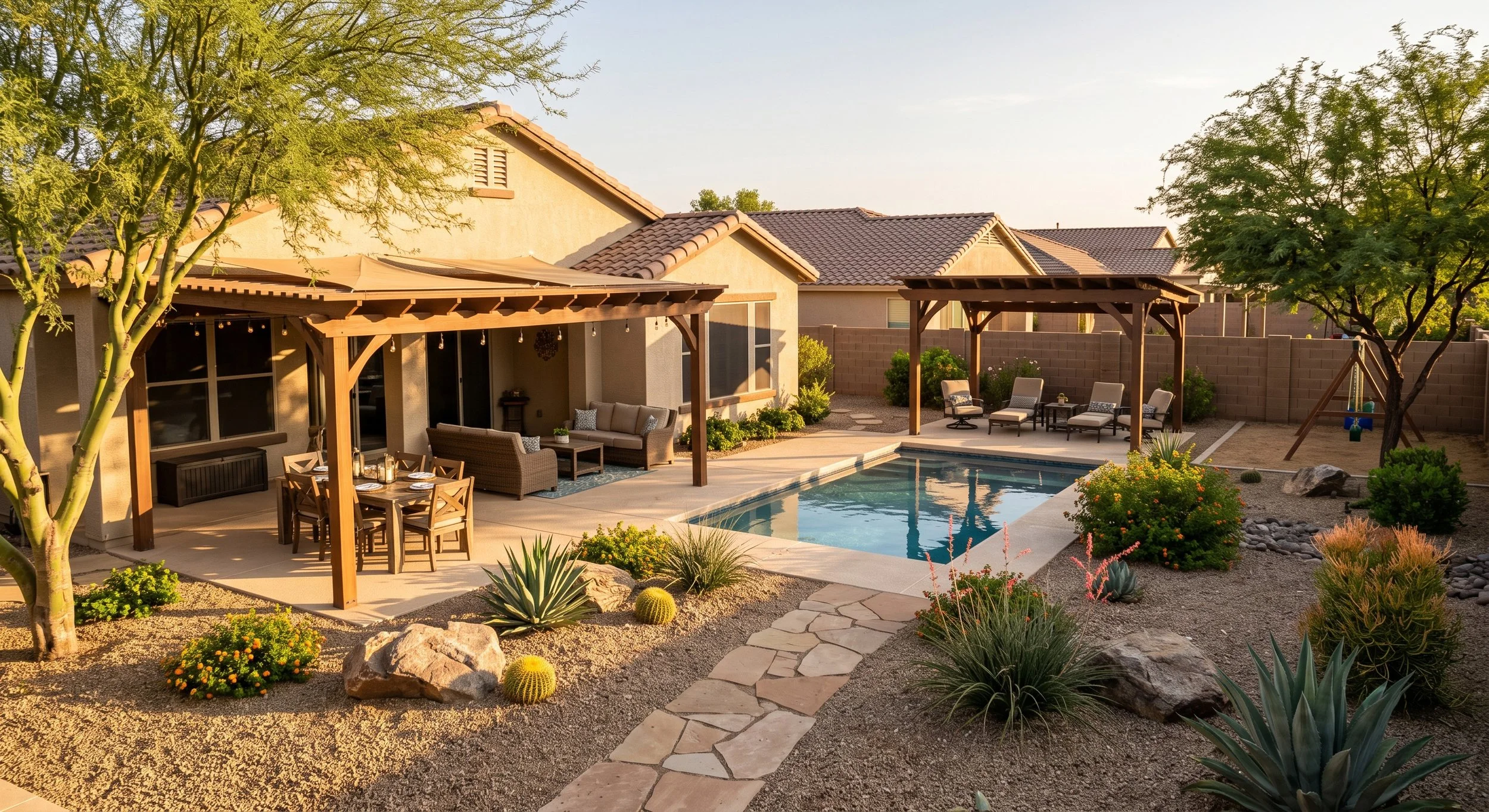
That may include:
Outdoor dining areas
Lounge seating
Play areas
Frequently used walkways
Outdoor kitchens
West facing patios
Poolside seating
Then decide whether the appropriate solution is a tree, pergola, ramada, shade sail, extended patio cover, or some combination.
Designing shade early can influence the entire backyard layout.
That is a good thing.
3. Putting Shade Where It Looks Good Instead of Where You Need It
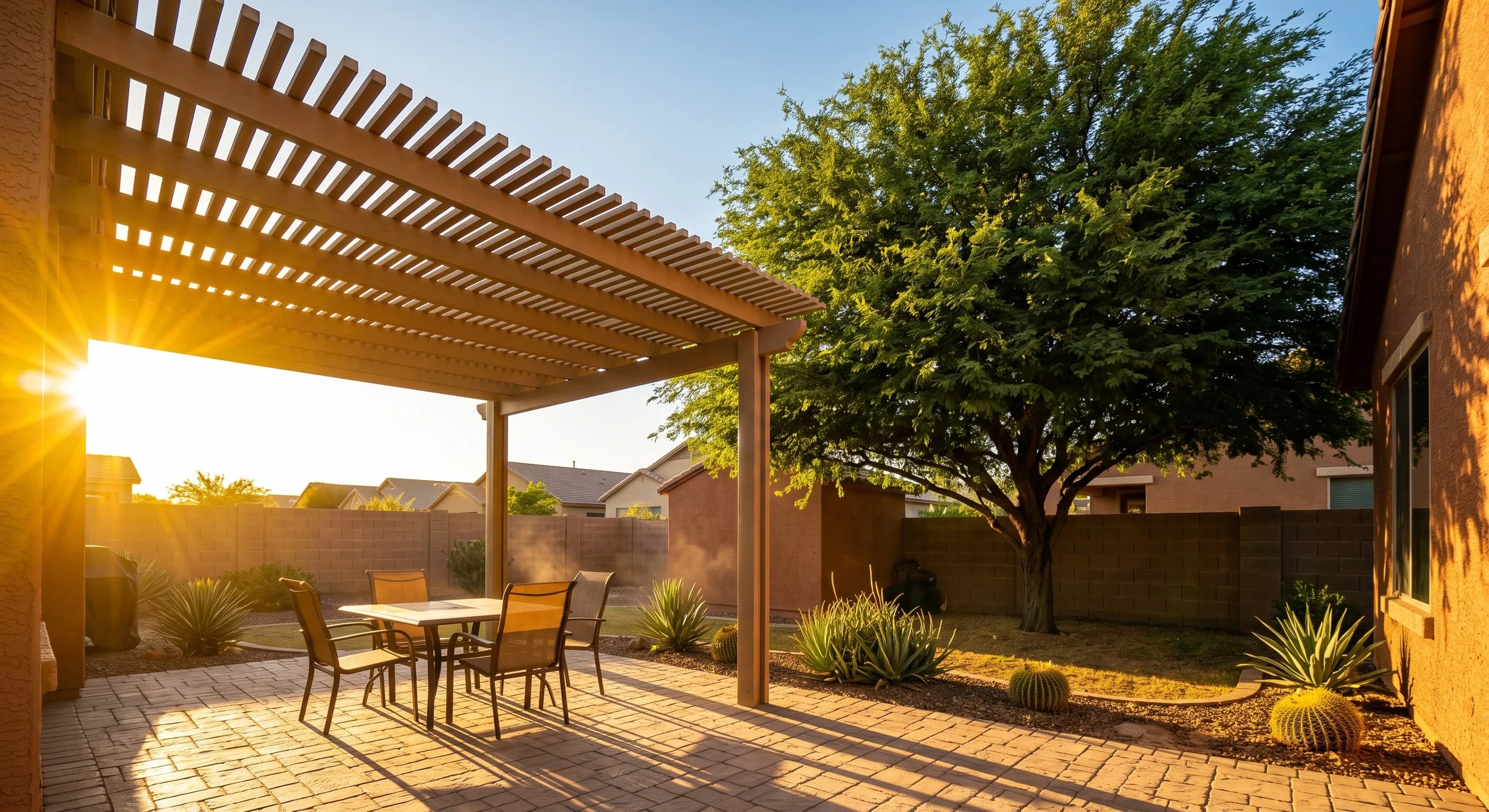
Having shade is not enough.
It needs to be in the right place at the right time.
A beautiful tree on the east side of a patio may look great in photographs while doing very little for a seating area exposed to intense western sun late in the afternoon.
A pergola can create a similar problem.
A structure may technically cover the patio while the angle of the afternoon sun still reaches underneath it.
A Better Approach
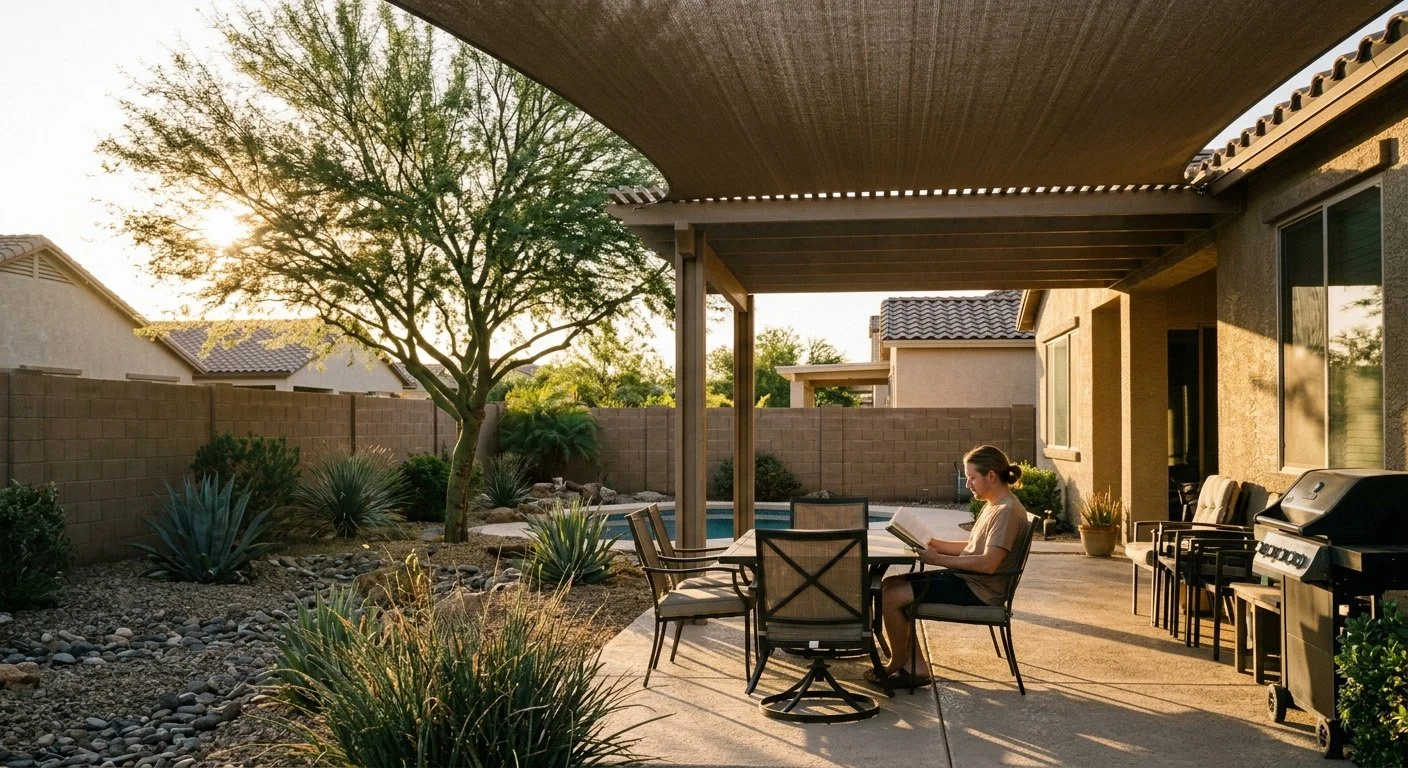
Think of the sun as something that moves through the property rather than something sitting directly overhead all day.
Western exposure deserves particular attention in Phoenix because outdoor spaces may still be receiving intense sunlight after surrounding surfaces have already been heating for hours.
Consider:
Which direction the backyard faces
Where the sun will be during the hours you actually use the space
The mature canopy size of proposed trees
The height of surrounding walls
The depth and orientation of built shade
Seasonal differences in sun exposure
The goal is not simply to add shade.
It is to put shade between you and the sun when you need it most.
4. Installing Huge Areas of Artificial Turf Without Shade
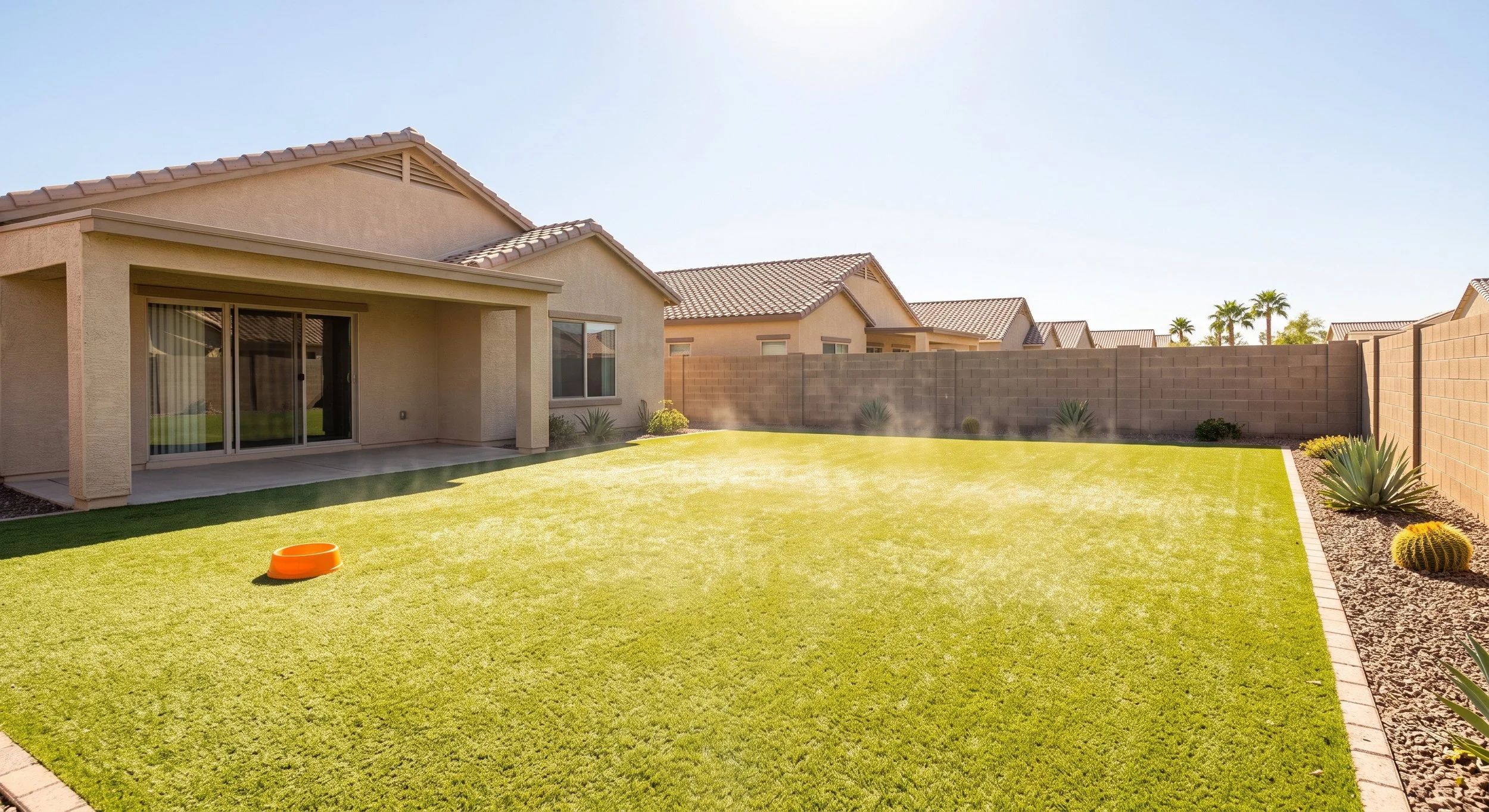
Artificial turf is popular in Phoenix for understandable reasons.
It stays visually green.
It does not need mowing.
It can provide a defined recreation area for children or pets.
But there is an important tradeoff.
Synthetic turf can become extremely hot in direct Arizona sun.
Research from Arizona State University helps illustrate just how hot synthetic surfaces can become.
In one field study, researchers measured an artificial turf surface at about 152 degrees Fahrenheit on a morning when the air temperature was approximately 95 degrees.
In a separate test on another day, natural grass measured about 91 degrees when the air temperature was around 90 degrees.
Those measurements were not taken side by side under identical conditions, so they should not be treated as a direct product comparison.
The broader lesson is still important.
Artificial surfaces exposed to Arizona sun can become intensely hot. Researchers also noted that the turf used in the study incorporated a cooling system, meaning typical artificial turf can still experience significant heat buildup.
A Better Approach
Treat artificial turf as a functional zone, not automatic groundcover for every open area.
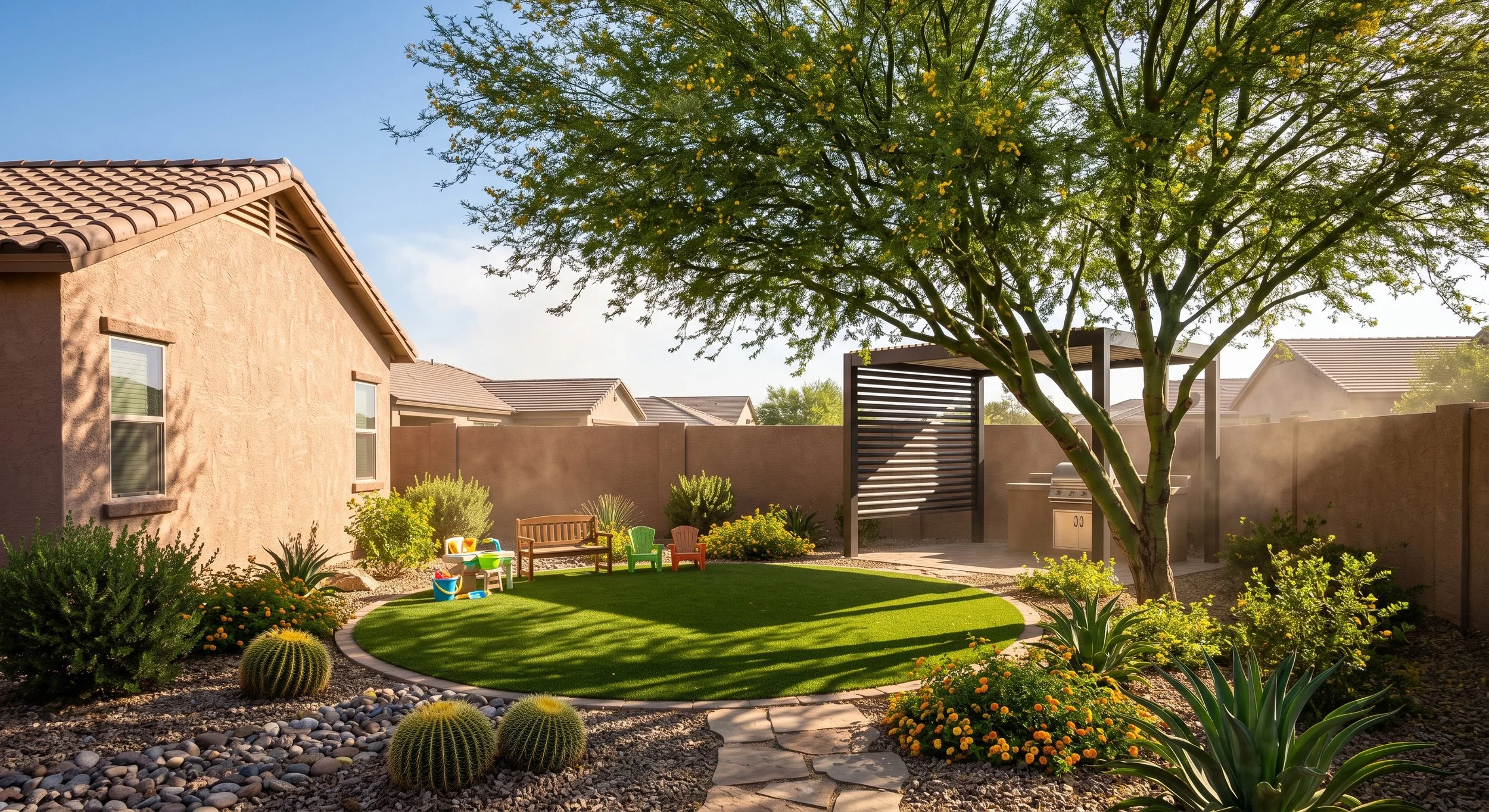
Ask what it is actually supposed to accomplish.
Is it for:
A dog run
Children's play
Games
A softer visual break from gravel
A flexible recreation area
Then size it accordingly.
Where possible, consider nearby trees or structures that can provide periods of shade rather than placing an enormous uninterrupted turf area in one of the hottest parts of the property.
A smaller, well placed turf area surrounded by planting can often look more intentional anyway.
5. Putting the Main Gathering Space in the Hottest Part of the Yard
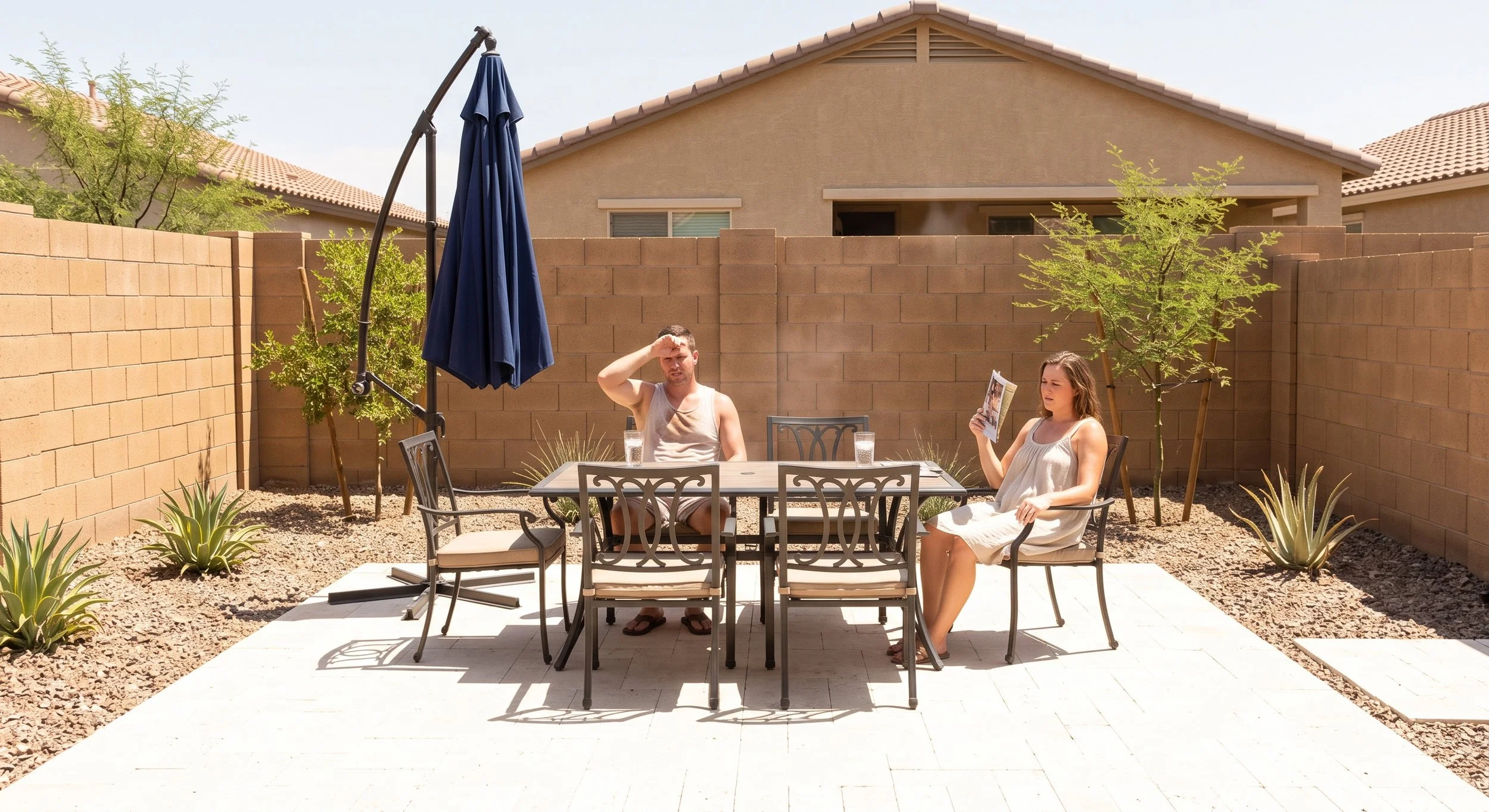
Sometimes the instinct is simple:
There is a big empty area over there, so that is where the seating should go.
But empty space is not automatically good outdoor living space.
If that location receives the harshest afternoon sun, sits beside exposed block walls, and offers little opportunity for shade, you may end up creating a beautiful patio nobody wants to use for much of the year.
A Better Approach
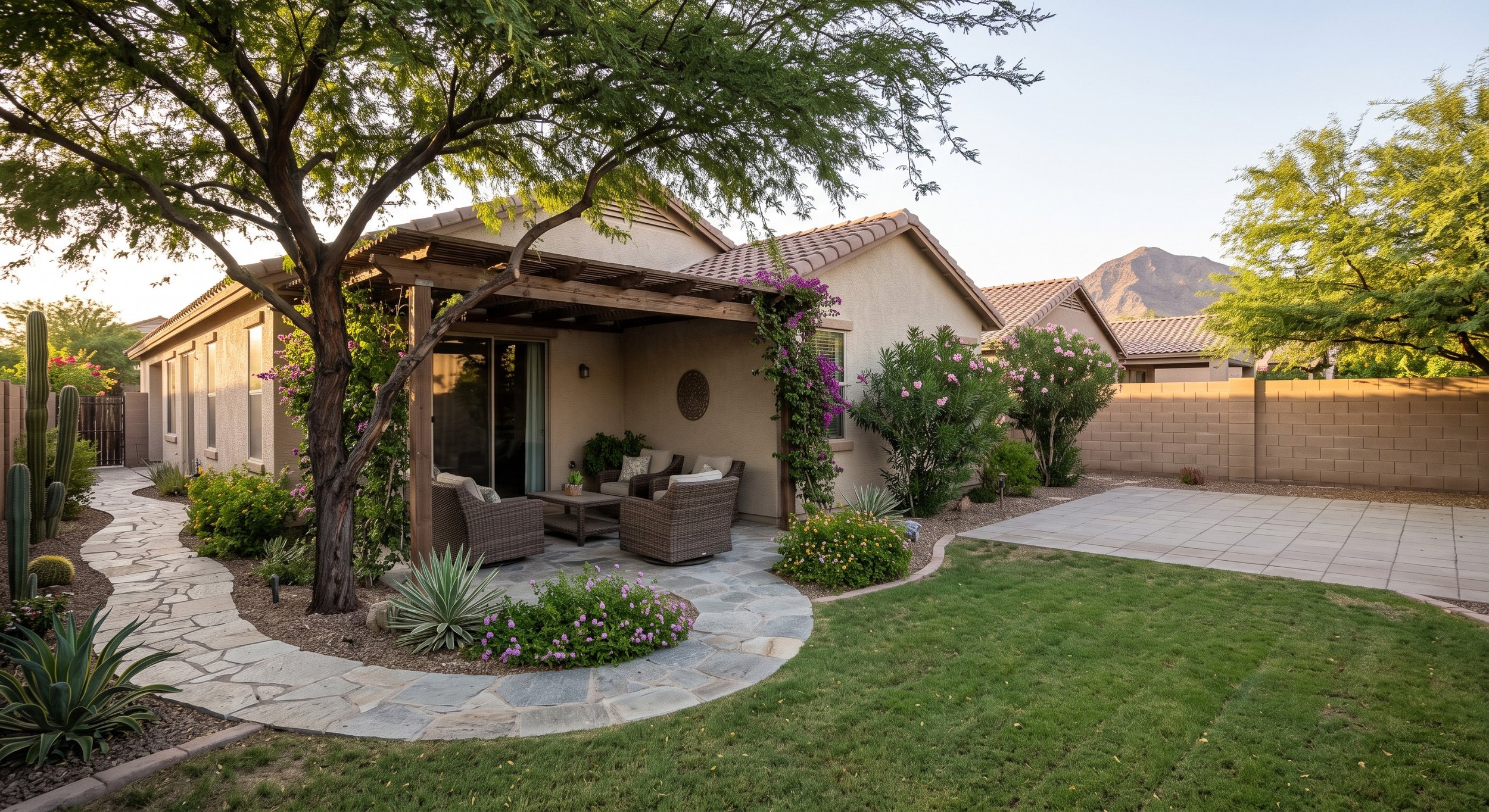
Before deciding where the main gathering area belongs, evaluate:
Sun exposure
Existing shade
Views
Privacy
Proximity to the house
Circulation
Nearby walls
Opportunities for trees or structures
Sometimes moving a seating area twenty feet can completely change how comfortable and connected it feels.
This is one reason landscape design is fundamentally a layout problem before it becomes a materials problem.
The nicest pavers in the world will not fix a patio placed in the wrong location.
6. Planting Trees Without Thinking About What They Will Shade
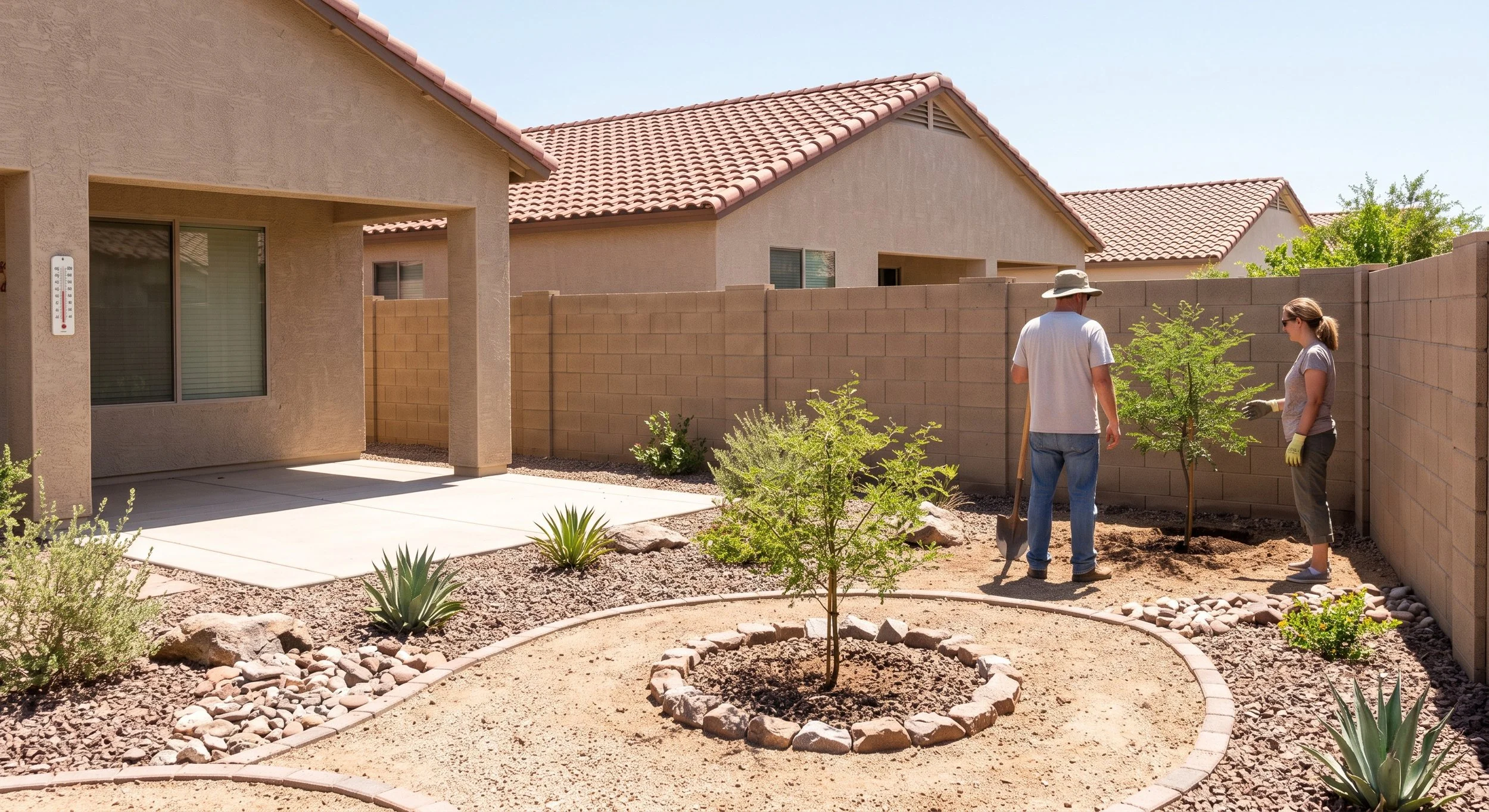
Adding trees is good.
Adding trees with intention is much better.
One common mistake is treating trees primarily as decorative objects.
A tree goes in the corner because the corner looks empty.
Another gets centered in a planting bed because it creates symmetry.
But in Phoenix, a significant tree can potentially do much more than simply look attractive.
A Better Approach
Ask what you want the mature canopy to accomplish.
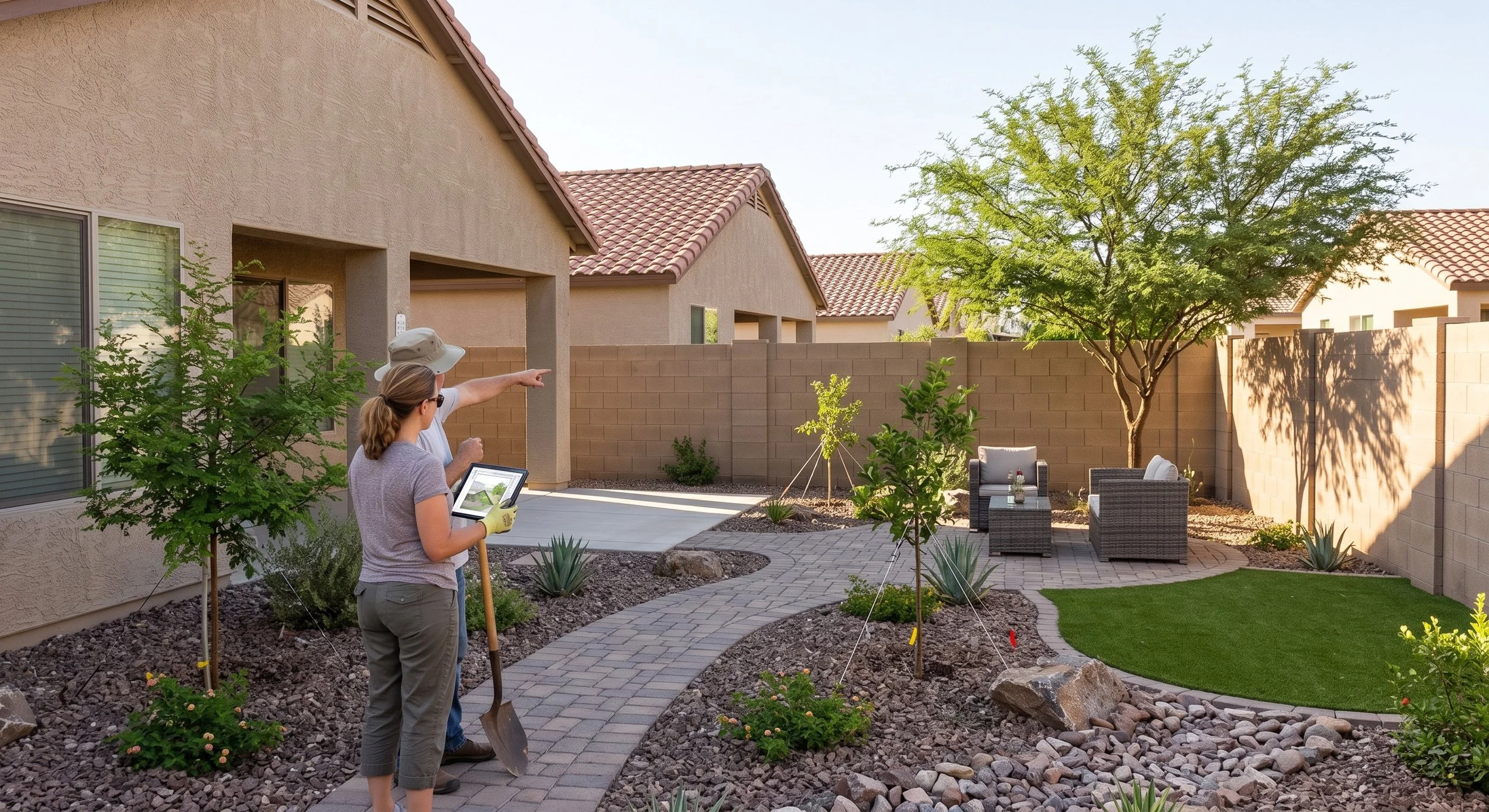
Could the tree eventually shade:
A seating area
A walkway
A west facing wall
Part of the house
A section of turf
A poolside lounge
An exposed paved area
Trees take time to reach useful size, which makes placement even more important.
You are not simply deciding where the trunk looks good today.
You are deciding where you want the canopy ten years from now.
7. Surrounding Every Outdoor Space With Bare Gravel
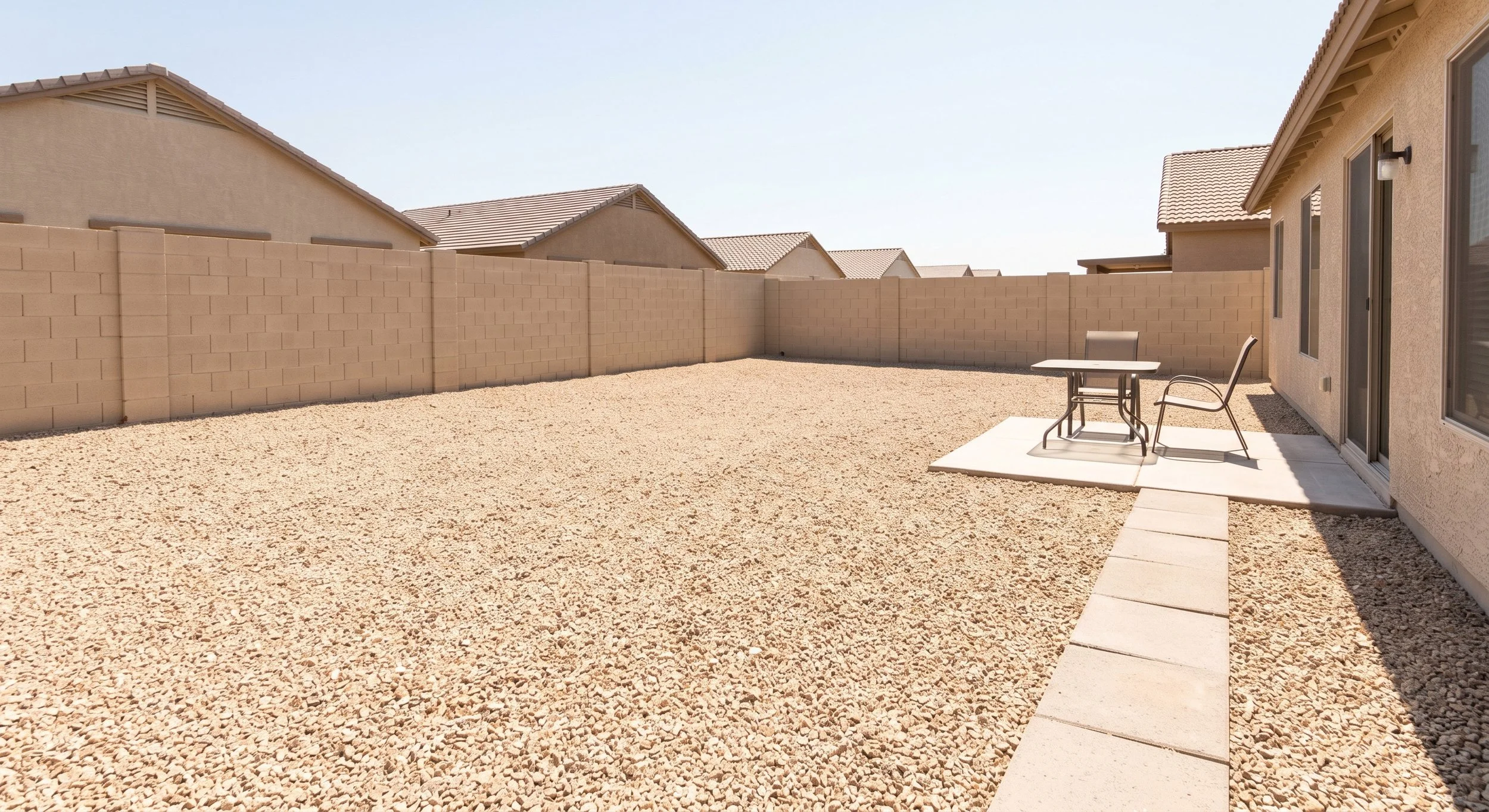
Gravel is part of the visual language of Arizona landscapes.
It is practical.
It is desert appropriate.
And when used well, it can be beautiful.
But a backyard made almost entirely from gravel, block walls, and paving can feel exposed and stark.
The problem is usually not the gravel itself.
It is the lack of anything interrupting all that open ground.
A Better Approach
Use gravel as the background rather than the entire design.
Create layers with:
Desert trees
Shrubs
Agaves
Ornamental grasses
Cacti
Groundcovers
Boulders
Different planting heights
The landscape should have enough vertical structure that you are not simply looking across one flat field of rock.
Planting can provide visual softness, strategic shade, and a stronger sense of enclosure around outdoor rooms.
This is one reason some xeriscape yards feel lush and inviting while others feel barren.
Low water does not have to mean low planting.
8. Ignoring Heat Coming From the Walls

Phoenix block walls provide privacy, but they are also an important part of the backyard environment.
A wall receiving hours of direct sunlight can make a nearby seating area feel especially harsh.
And because many suburban backyards are relatively compact, those walls may sit close to where people gather.
A Better Approach
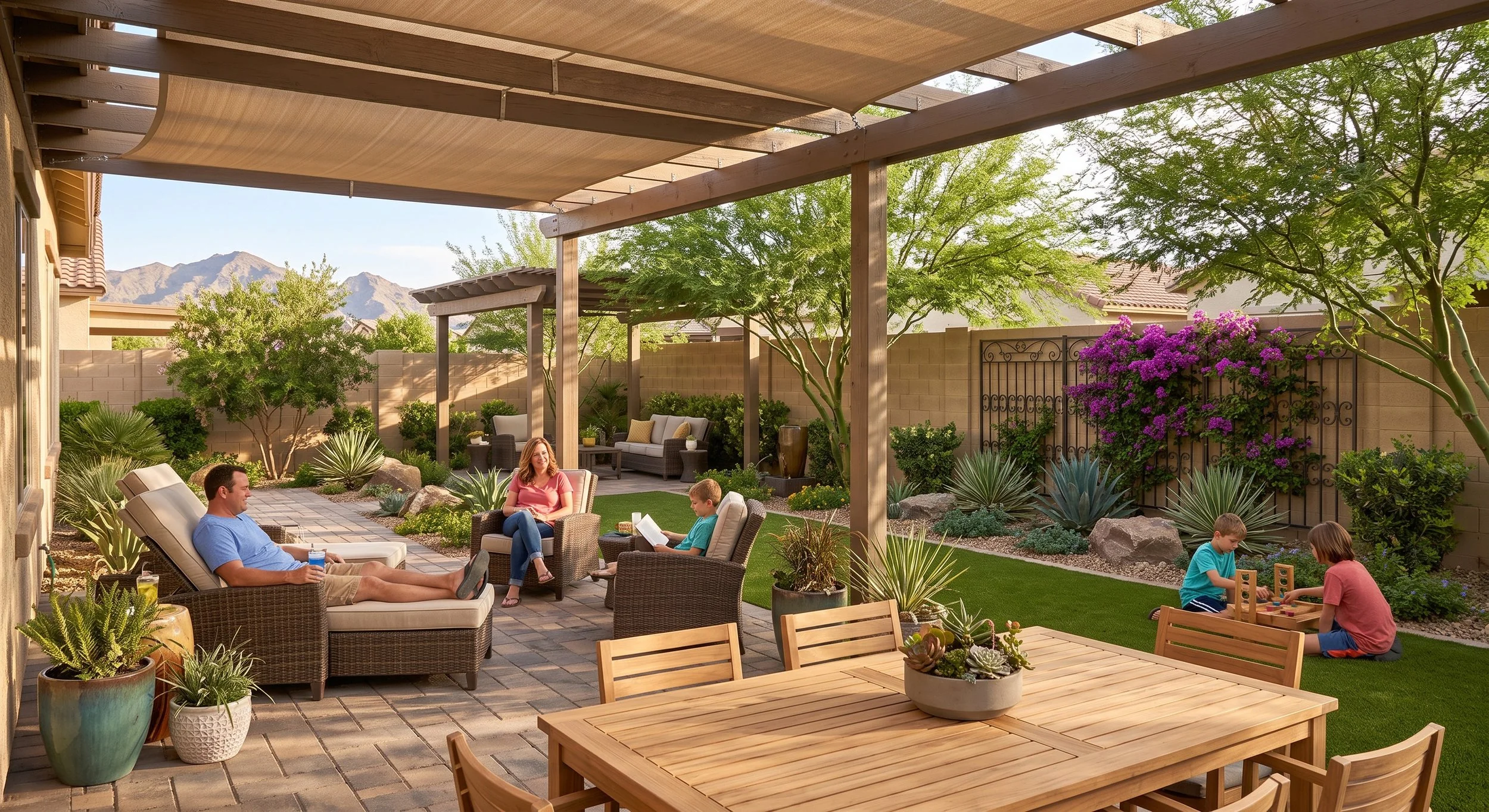
Instead of thinking only about hiding the wall behind a row of shrubs, think about the entire edge of the property.
Depending on the yard, that might include:
Trees positioned to cast shade
Layered shrubs
Climbing plants where appropriate
Trellises
Pergolas
Deeper planting areas
Strategic seating placement
The goal is not necessarily to cover every inch of wall.
It is to keep your outdoor living areas from feeling like they are sitting inside a sun baked box.
9. Designing for January Instead of July
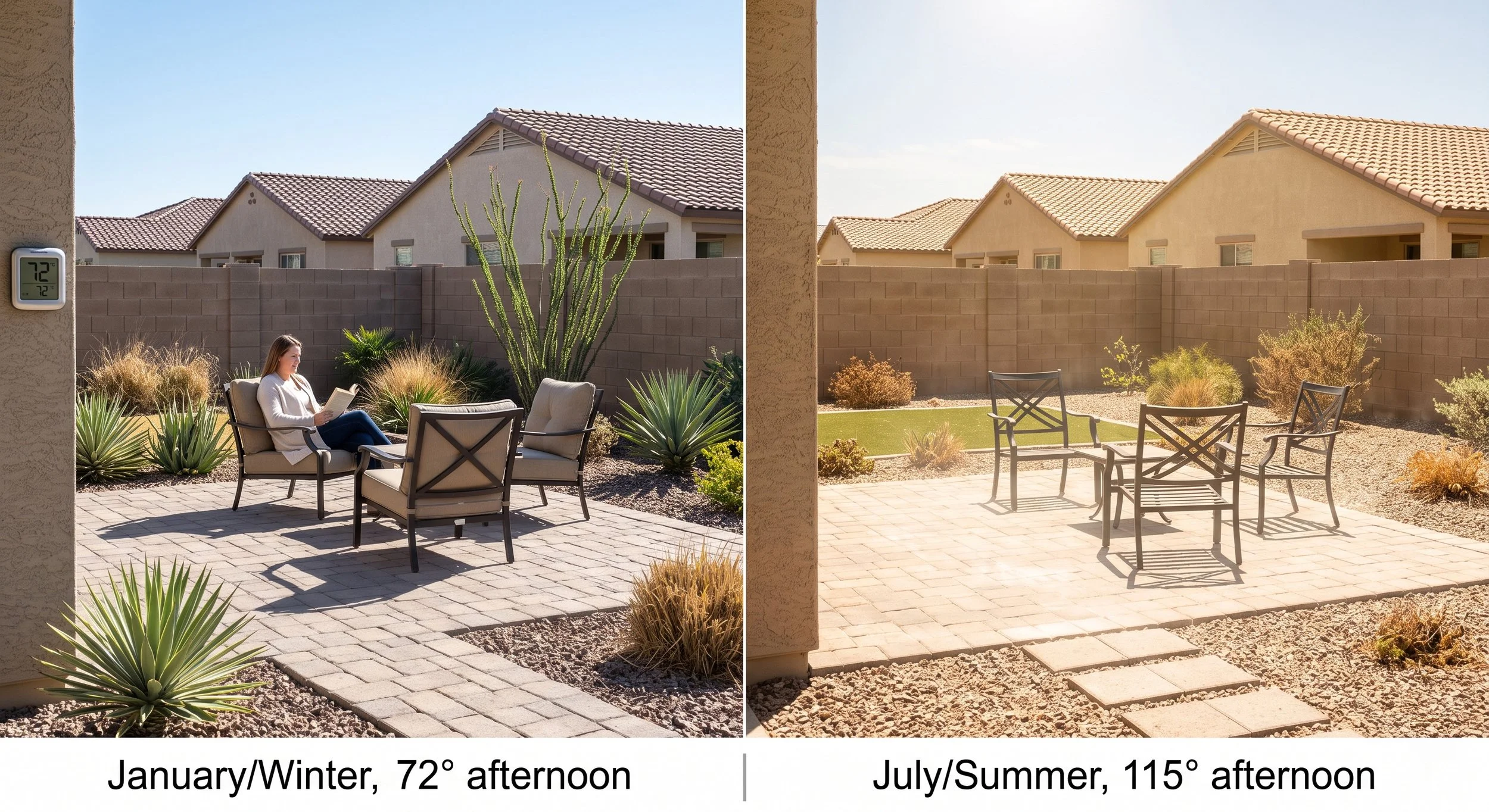
This is an easy trap in Arizona.
January is beautiful.
February is beautiful.
March is beautiful.
You stand outside on a 72 degree afternoon and think:
This is exactly where the patio should go.
But the yard needs to function beyond the months when almost anywhere outside feels comfortable.
A Better Approach
Mentally test the backyard in different seasons while you design it.
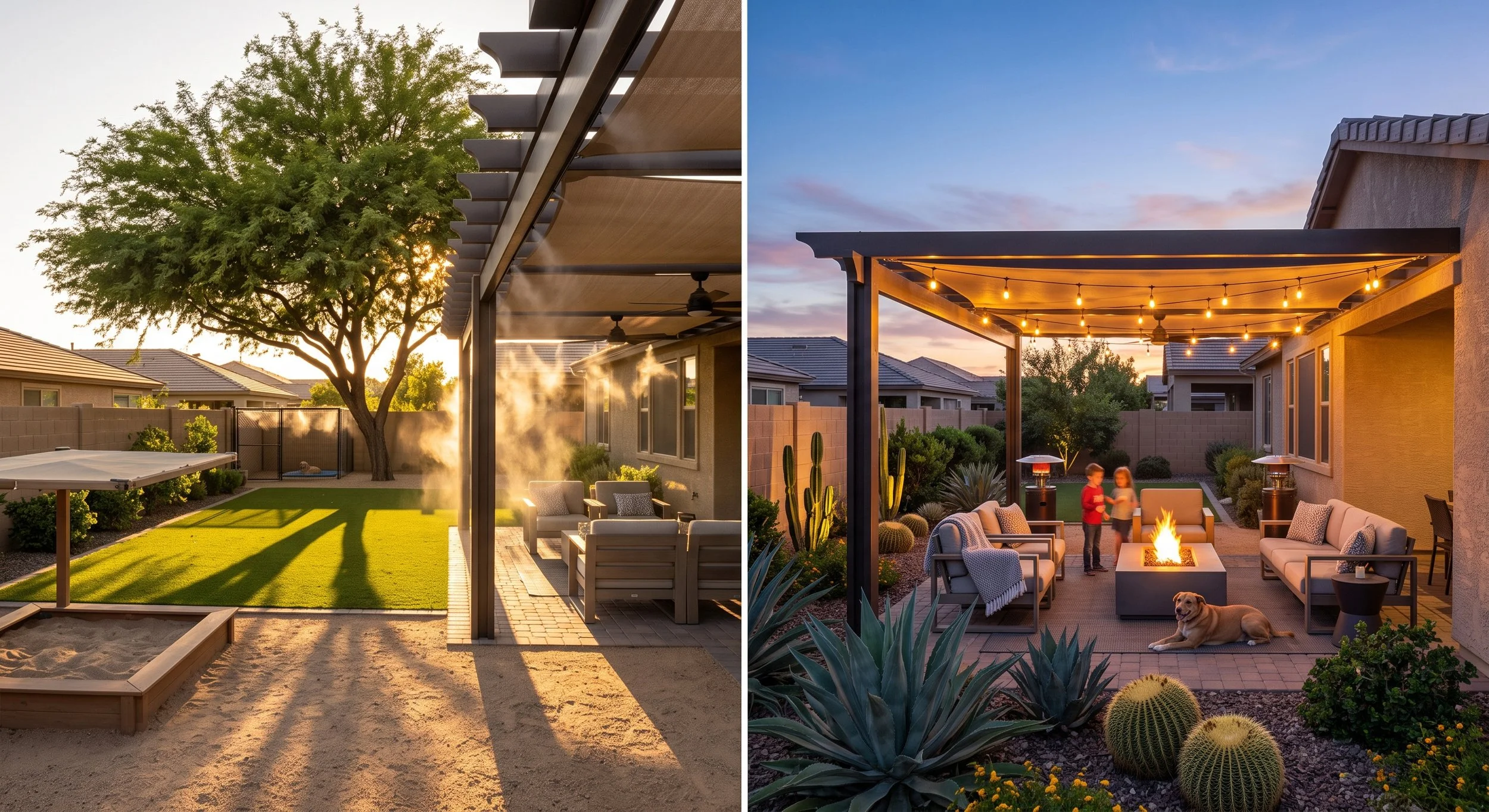
Ask:
What does this space feel like at 4:30 PM in July?
Where is the sun?
Where is the shade?
Which surfaces have been heating all day?
Would anyone actually want to sit here?
Where would the dog go?
Where would children play?
Then think about the opposite condition.
What happens here on a beautiful January evening?
Phoenix landscapes should take full advantage of our excellent cool season weather without becoming unnecessarily uncomfortable during summer.
Designing for both conditions creates a backyard that works better year round.
10. Designing the Features First and the Microclimate Second
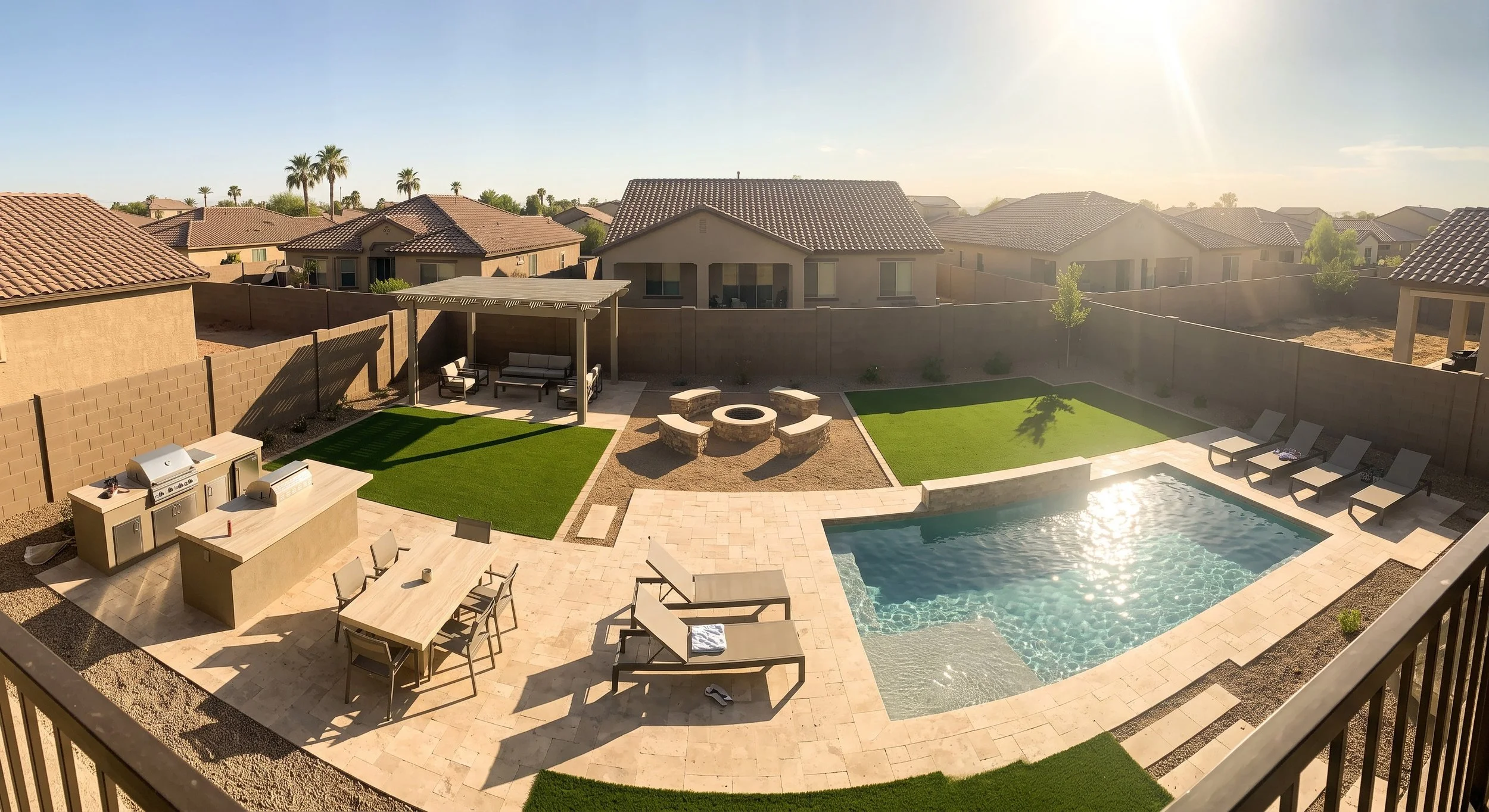
This may be the biggest lesson in the entire list.
People naturally begin with features.
Outdoor kitchen.
Fire pit.
Pool.
Pergola.
Turf.
Dining table.
But before deciding where those things belong, it helps to understand the microclimate of the property itself.
Which areas receive morning sun?
Which areas receive intense afternoon sun?
Where are the existing mature trees?
Where does the house already create useful shade?
Which walls receive western exposure?
Which parts of the property stay shaded longer?
Those conditions should help shape the layout.
Not the other way around.
A Better Approach
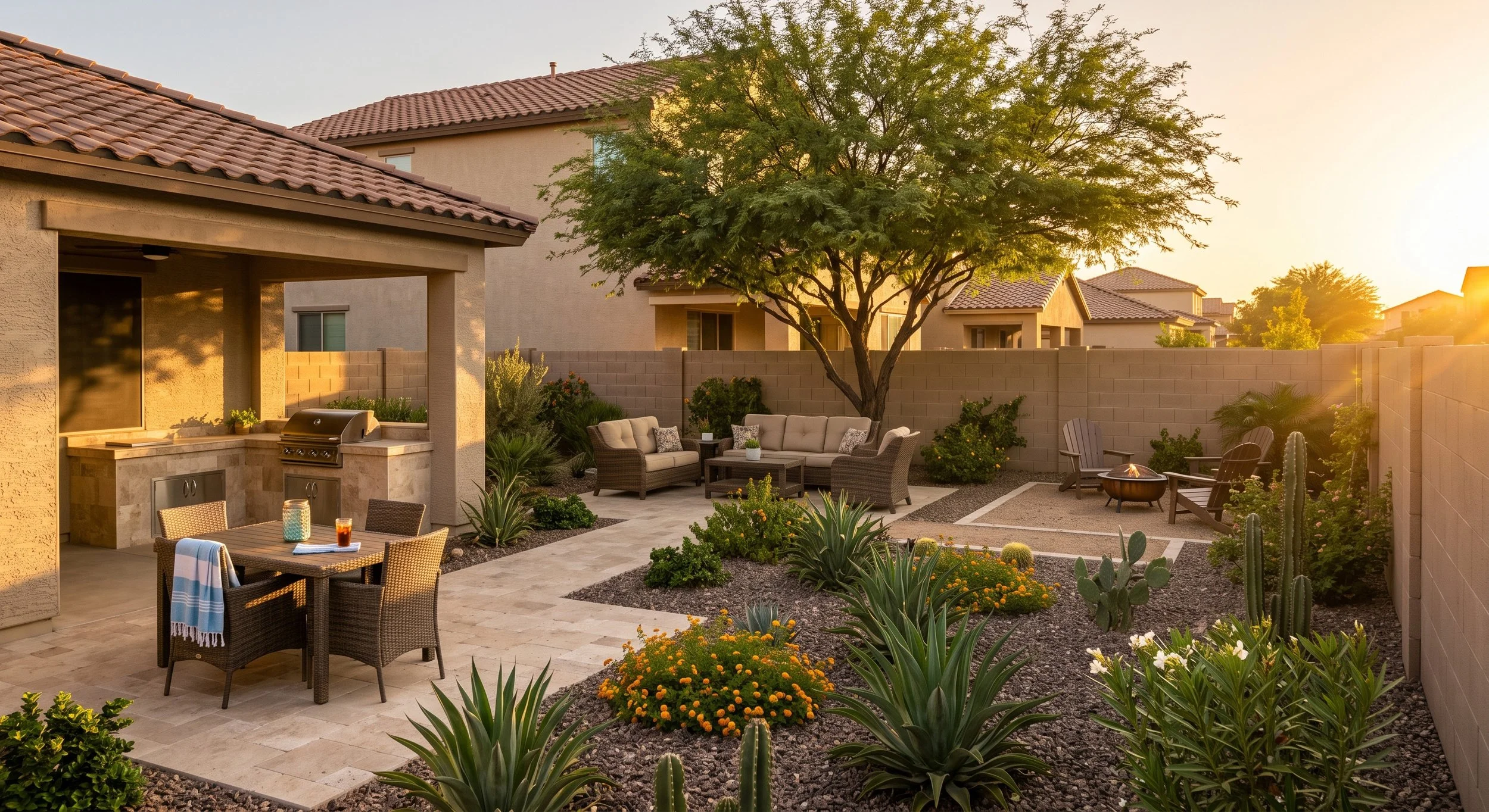
Start with the property.
Then fit the wish list into the places where each feature will actually work best.
Maybe the fire lounge belongs somewhere completely different than you originally imagined.
Maybe the outdoor kitchen should stay beneath the existing patio roof instead of becoming a freestanding feature in full sun.
Maybe the largest tree belongs next to the seating area rather than in the corner.
Maybe you do not need another 500 square feet of paving after all.
The question should not simply be:
Where can this feature fit?
It should be:
Where will this feature actually be enjoyable to use?
The Goal Is Not to Make a Phoenix Backyard Cold
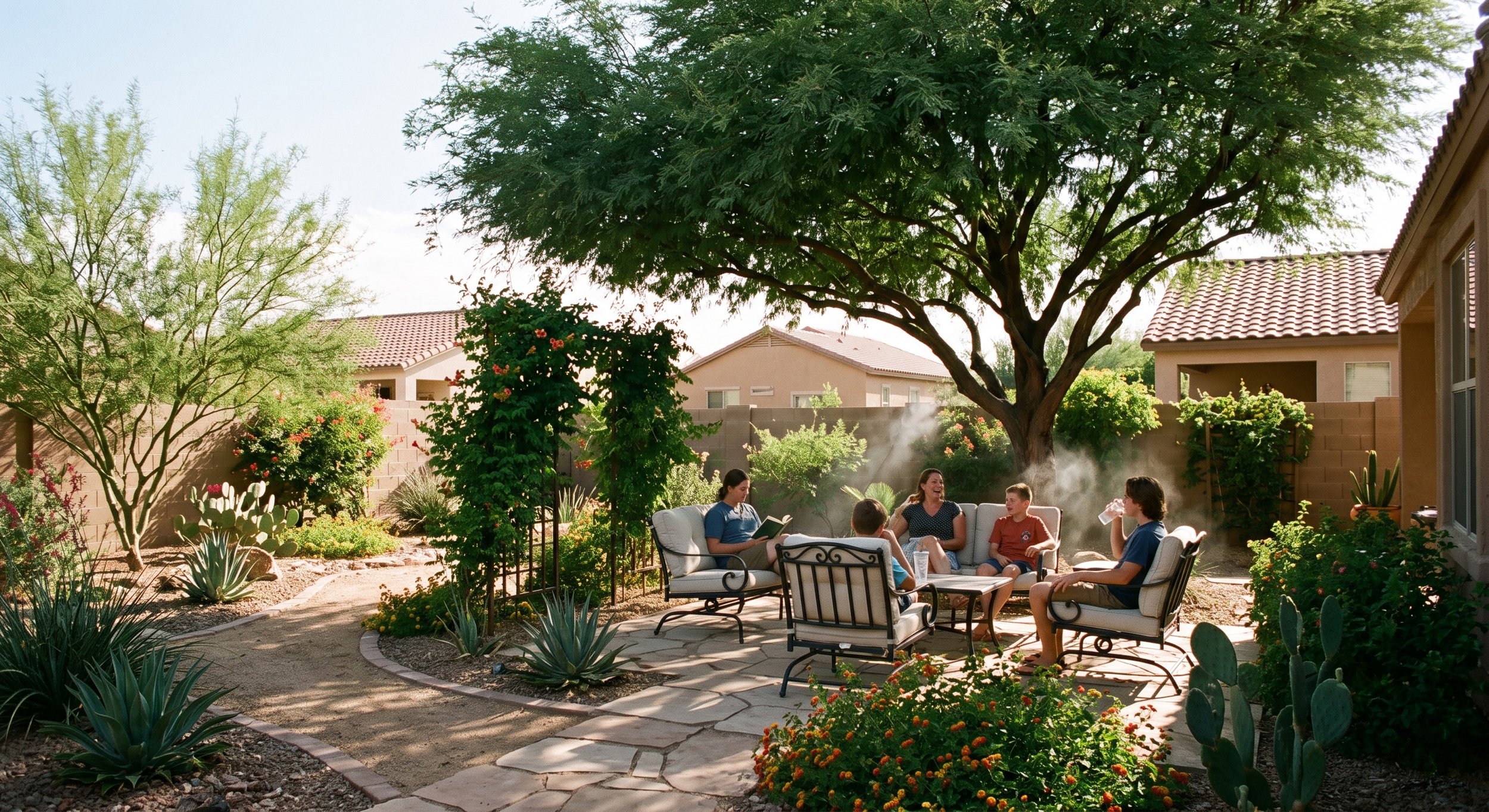
That is not realistic.
Phoenix is Phoenix.
Landscape design is not going to turn a July afternoon into San Diego.
But that is not the goal.
The goal is to avoid making an already hot climate unnecessarily worse.
A thoughtful backyard can create pockets of comfort.
Shade where people gather.
Trees where their canopy actually matters.
Hardscape where it is useful rather than everywhere.
Planting that breaks up exposed surfaces.
Outdoor rooms positioned around the conditions of the property rather than fighting against them.
You may not control the temperature outside.
But you can control how your backyard responds to it.
A Cooler Backyard Often Starts With Better Layout
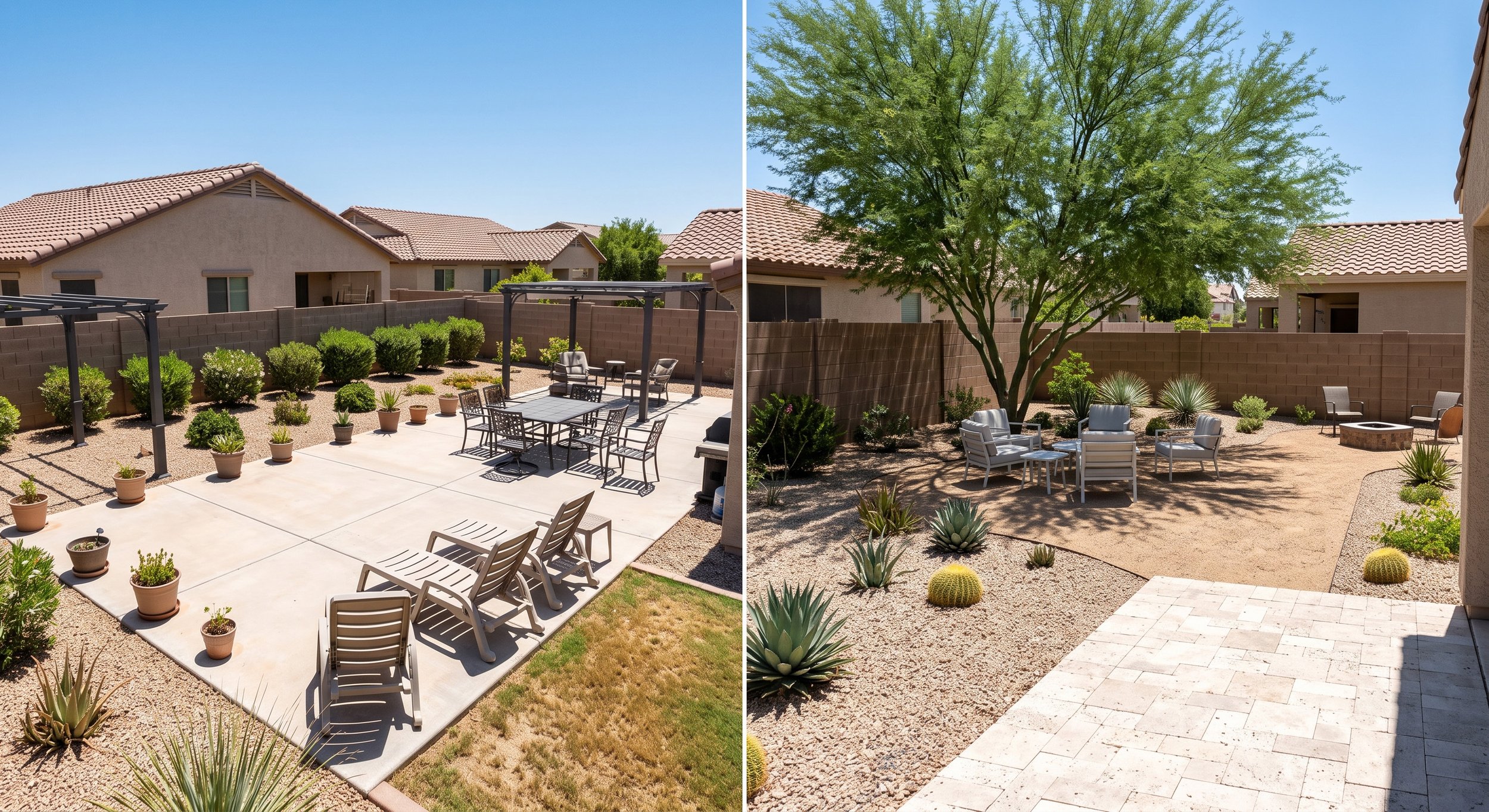
Heat reinforces something that is true about landscape design in general.
Good design is rarely about adding more stuff.
You do not necessarily need another feature.
You may need the features you already want to be positioned better.
A shaded lounge may be more valuable than a second patio.
One strategically located tree might improve the backyard more than fifteen decorative shrubs.
Reducing unnecessary paving might do more for the comfort of the yard than upgrading the paving material itself.
That is why it helps to solve the overall layout before individual construction decisions begin.
If your backyard also feels uncomfortable or disconnected for reasons that have nothing to do with heat, you may want to read:
Related Journal article: Why Your Yard Feels "Off": It Is Usually a Layout Problem, Not a Plant Problem
If you are starting to think about what a larger backyard renovation might cost, you may also want to read:
Related Journal article: What Does a $25K vs. $50K vs. $100K Phoenix Backyard Actually Look Like?
How Desert Curb Studio Approaches Heat in a Phoenix Backyard
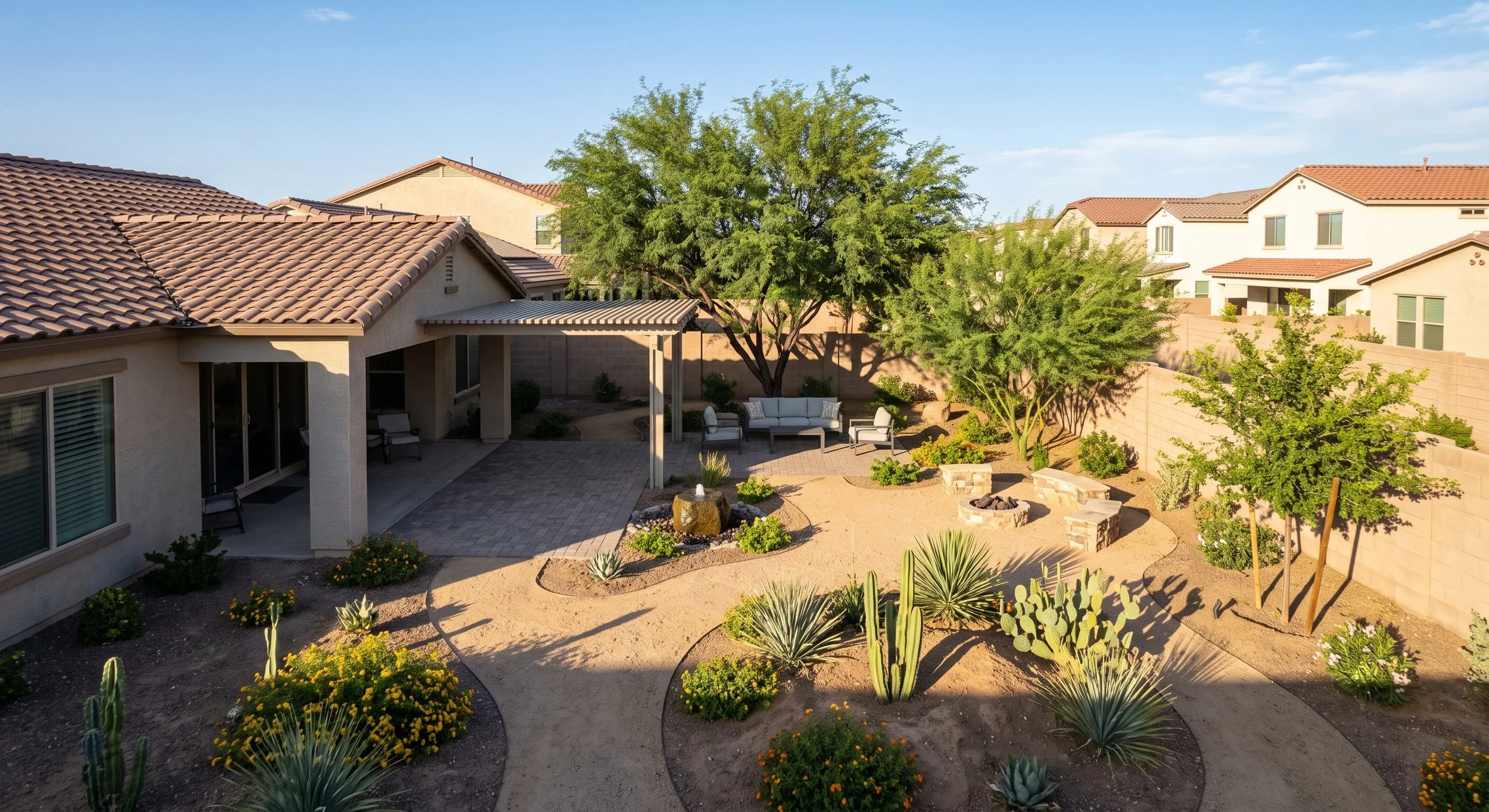
At Desert Curb Studio, we do not look at a backyard as an empty canvas waiting to be filled with features.
We begin by understanding the property itself.
Where does the harshest sun come from?
Where is useful existing shade?
When do you actually use the yard?
Which areas need to feel cooler and more protected?
Where could trees provide the greatest long term value?
How much hardscape do you really need?
Could an outdoor living space be repositioned to work better with the house and the sun?
From there, the design process begins organizing shade, planting, circulation, gathering areas, materials, and outdoor living features into a landscape that makes sense for how people actually live in Phoenix.
The goal is not simply to create a beautiful rendering.
It is to create a landscape that has a reason behind where everything goes.
Does Your Backyard Feel Too Hot to Actually Use?
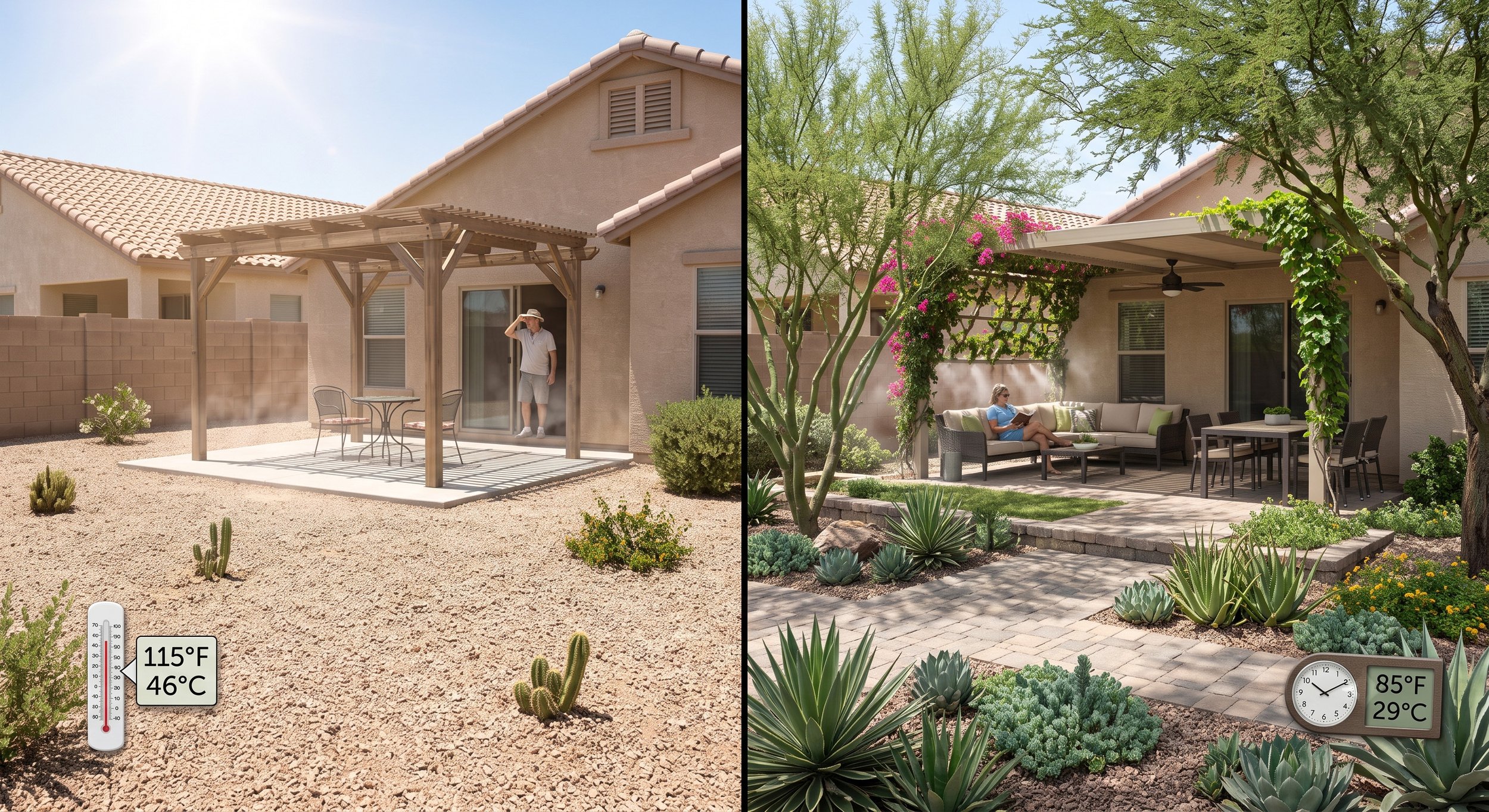
Maybe the solution is not simply adding a pergola.
And it probably is not buying more plants at random.
Sometimes the real issue is the relationship between sun, shade, surfaces, planting, and layout.
At Desert Curb Studio, the first step is a complimentary Discovery Call where we can talk about your property, what is currently not working, and what you would like your outdoor space to become.
You do not need to know the solution before reaching out.
That is what the design process is for.
Design for the climate. Create shade with purpose. Then build with confidence.
Schedule your complimentary Discovery Call with Desert Curb Studio.
Sources and Heat References
Heat and shade context in this article draws on publicly available information from the City of Phoenix and Arizona State University, including research examining shade, outdoor surface temperatures, and heat conditions in the Phoenix area.
The temperature examples included here are intended as general research context and should not be interpreted as project specific guarantees.
Research references reviewed September 2026.