
Before You Hire a Landscaper, Start With a Design Concept

Hiring a landscaper can feel like the “next logical step” when your yard needs work.
You look outside, see dirt, patchy grass, awkward planting, a blank patio, or a front yard that does nothing for the home — and your first thought is probably:
“I need to call someone to fix this.”
And eventually, yes, you probably will need a landscaper, installer, hardscape crew, pool contractor, or outdoor living specialist.
But before you start collecting bids, comparing prices, or asking crews what they would do with the space, there is one step that can save you a lot of confusion:
Start with a design concept.
A design concept gives you a clear visual direction before you spend money on labor, materials, demo, planting, irrigation, pavers, turf, lighting, or shade structures.
Instead of hoping everyone understands your vision, you can actually see it first.
The Problem With Starting With the Installer First
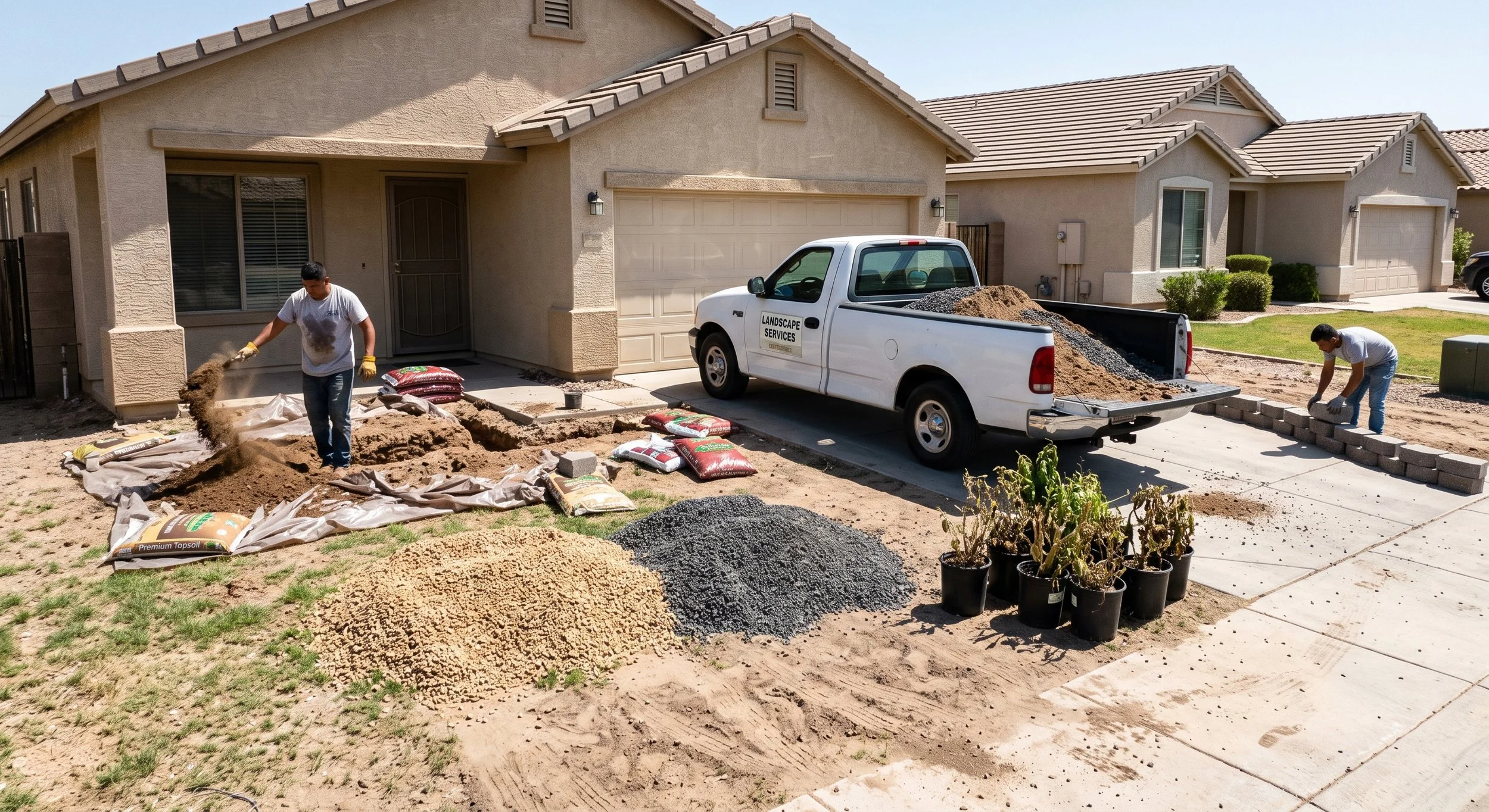
Most homeowners jump straight from “I don’t like my yard” to “I need a landscaper.”
That sounds normal, but it can create a few problems.
When you reach out to a landscaper without a clear design direction, the conversation usually starts with broad questions:
“What are you thinking?”
“What do you want to do here?”
“What’s your budget?”
“Do you want turf, pavers, plants, gravel, lighting, a pergola?”
And if you are still unsure, the landscaper may end up guiding the entire vision based on what they typically install.
That is not always a bad thing. Many installers are experienced and can offer practical ideas. But their job is usually to build the project, price the work, and solve construction details.
Their job is not always to help you explore the full potential of the yard before decisions are made.
That means your final yard may end up being shaped more by quick assumptions, budget shortcuts, or whatever was easiest to quote — instead of a thoughtful plan for how the space should look and feel.
A Design Concept Helps You See the Yard Before You Commit
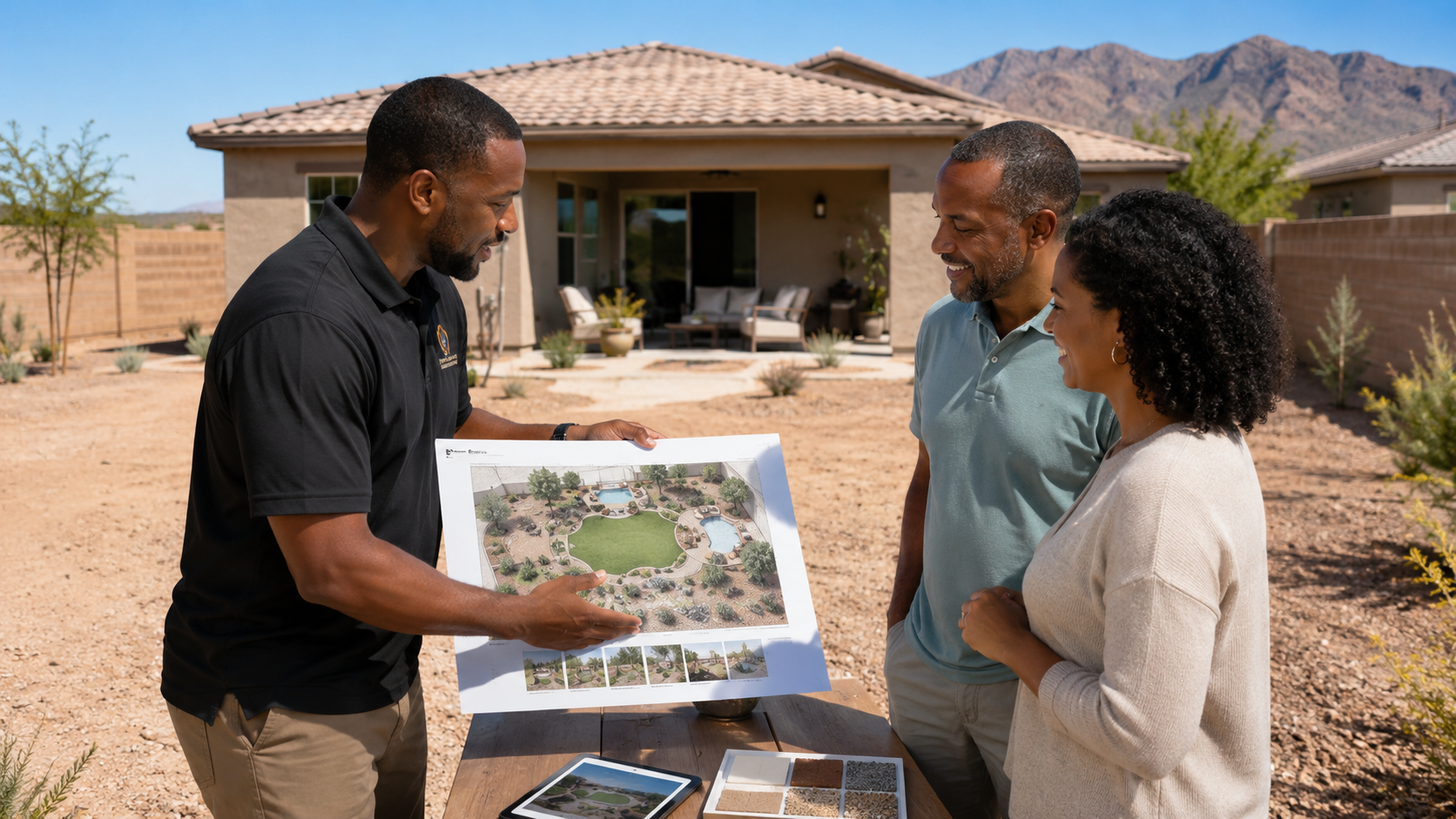
A design concept is not the same thing as a full construction plan.
It is a visual preview of what your yard could become.
For example, a concept might show:
How the front entry could feel more welcoming.
How a blank backyard could become an outdoor lounge.
Where shade, planting, lighting, turf, gravel, or seating could go.
How desert plants could soften the home without overcomplicating maintenance.
How the yard could feel finished instead of flat, empty, or disconnected.
The goal is not to make every final construction decision immediately.
The goal is to give you a clear direction.
Before you hire a crew, you should be able to look at the concept and say:
“Yes, this is the direction I want.”
That one moment of clarity can make the entire process easier.
Why This Matters Before You Spend Real Money
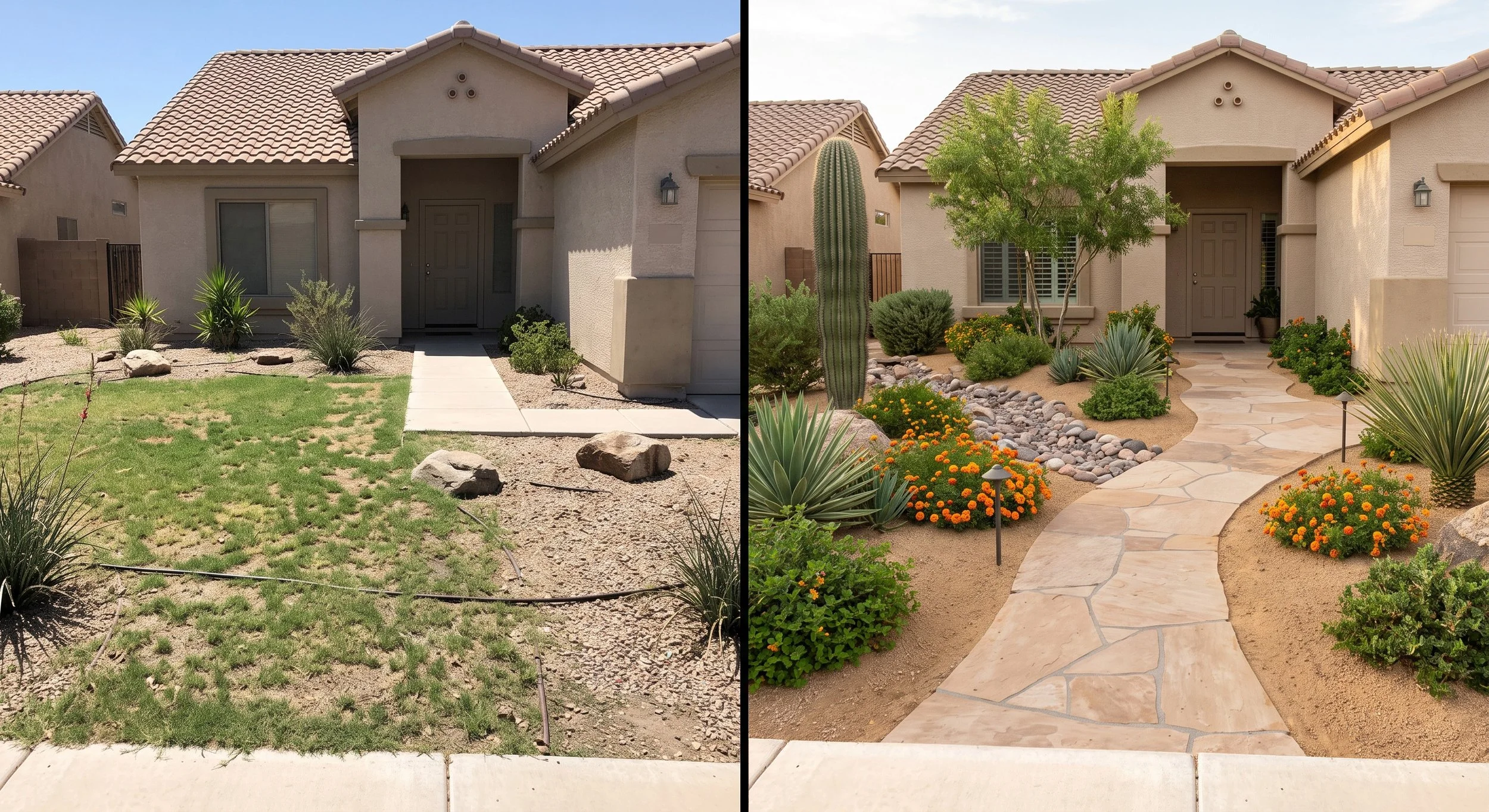
Rough installed cost: $12,000–$28,000
Landscape projects can get expensive fast.
Even simple changes can add up once you include labor, material delivery, irrigation adjustments, lighting, grading, demo, hardscape, planting, drainage, and cleanup.
The risk is not just spending money.
The bigger risk is spending money on a yard that still feels unfinished.
A homeowner might install turf but still feel like the space lacks structure.
They might add plants but still feel like the yard looks random.
They might pour a patio but realize later that the seating area feels disconnected.
They might add gravel and a few shrubs but still wonder why the home does not feel more inviting.
That is usually not because the homeowner made a bad choice.
It is because the project started with pieces instead of a vision.
A design concept helps you think about the whole yard before installing one part of it.
A Concept Can Make Bids Easier to Compare
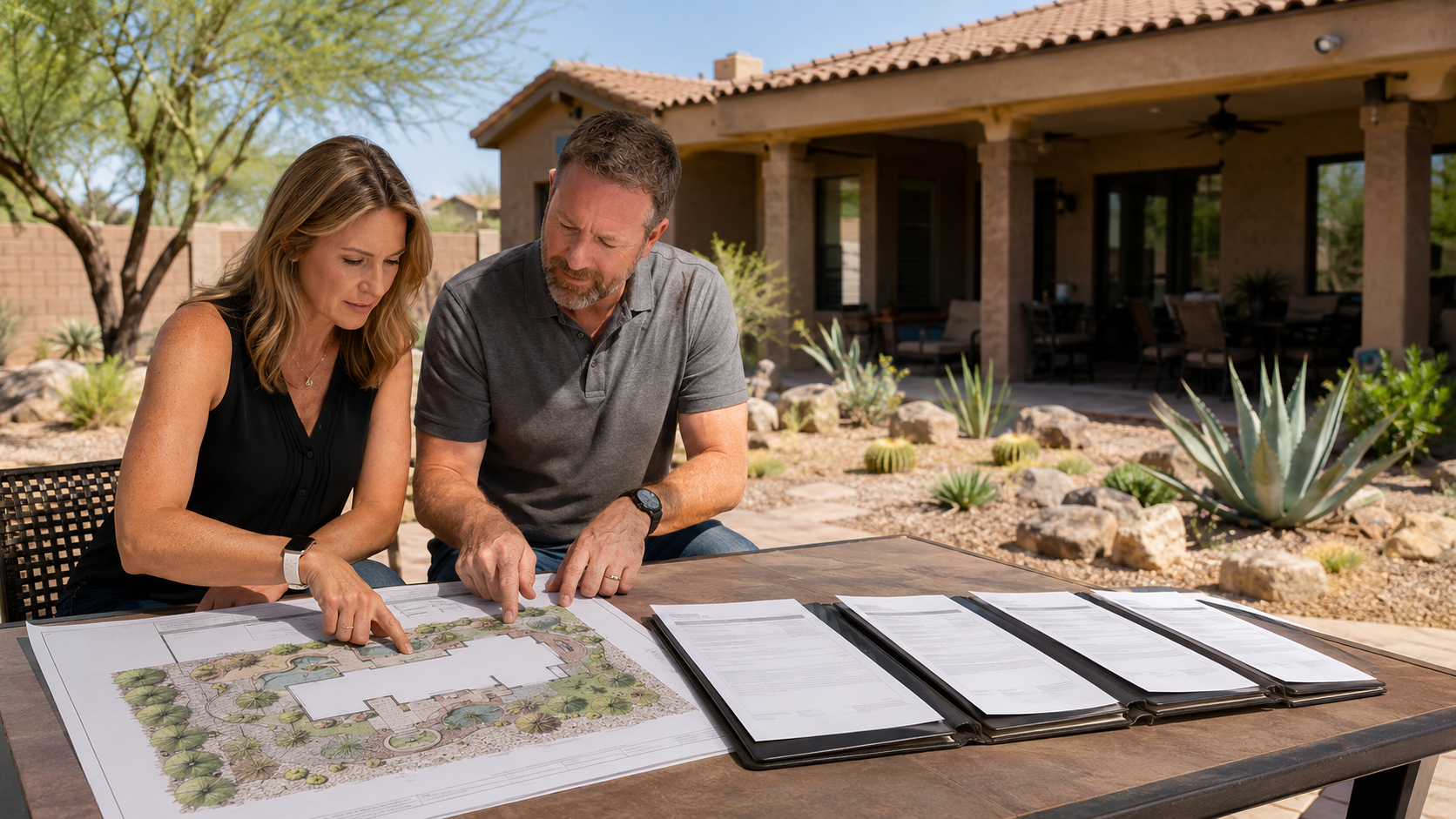
One of the most frustrating parts of hiring landscapers is comparing estimates.
You may get three quotes from three different companies, but each one may be quoting something slightly different.
One contractor includes more plants.
Another includes cheaper material.
Another has a larger paver area.
Another assumes no lighting.
Another leaves out irrigation.
Another suggests a totally different layout.
Suddenly, you are not comparing apples to apples.
You are comparing three different interpretations of a yard you have not fully defined yet.
When you start with a design concept, you can show each installer the same visual direction.
That makes the bidding conversation much more focused.
Instead of saying:
“What do you think we should do?”
You can say:
“This is the general look and layout I’m trying to achieve. What would it take to build something in this direction?”
That gives contractors something clearer to respond to, and it gives you a better way to understand what you are actually paying for.
It Reduces Second-Guessing
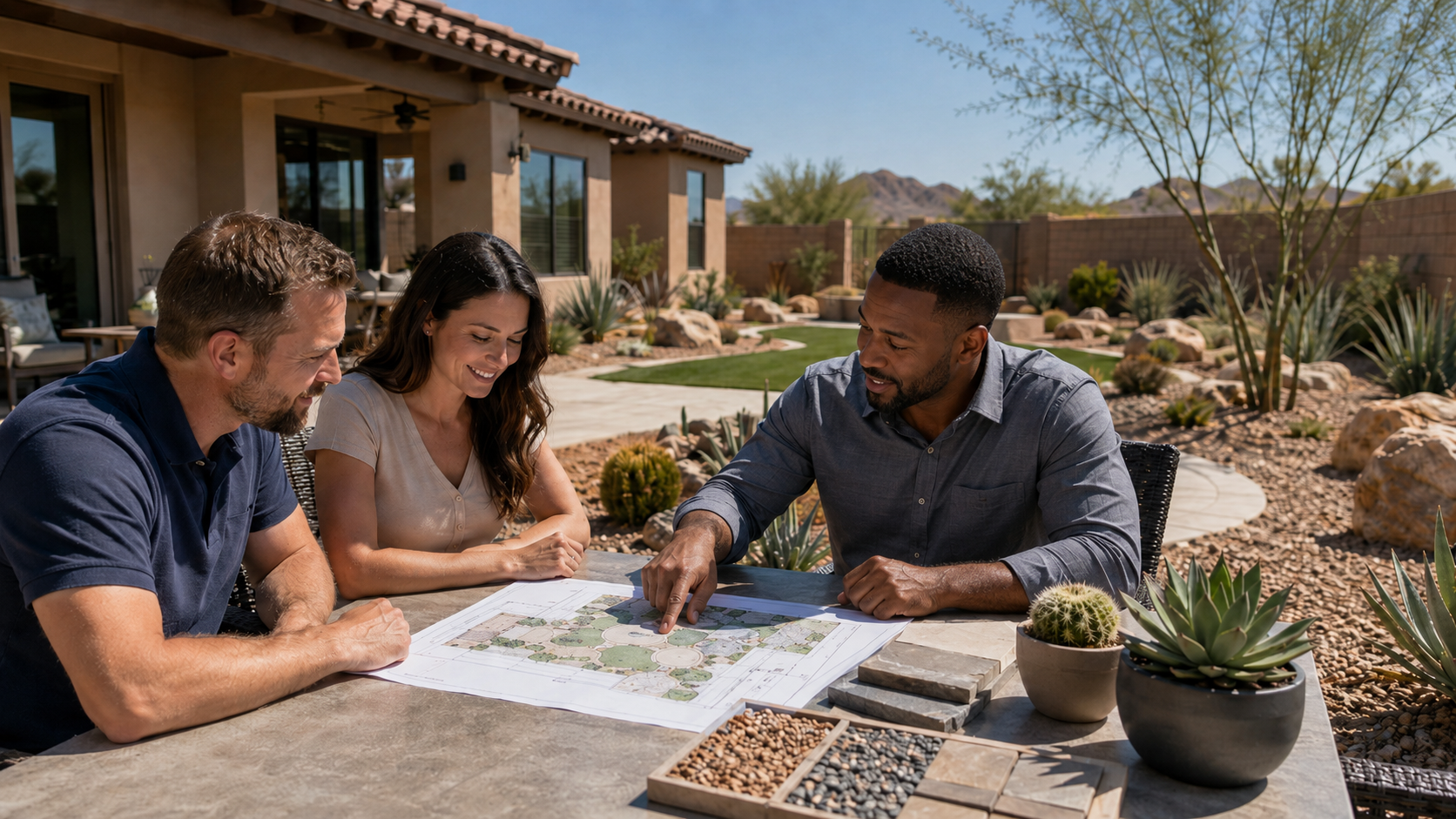
One of the hardest parts of improving a yard is the constant second-guessing.
Should we do turf or gravel?
Should the seating area go here or there?
Should we add trees now or later?
Will this look too empty?
Will this look too busy?
Will the plants match the house?
Will this actually feel like the inspiration photos?
A concept does not remove every decision, but it gives you a visual anchor.
You are no longer trying to imagine the finished yard from a material list or a quick sketch.
You can see the direction.
That makes it easier to make decisions with confidence instead of guessing your way through the process.
It Helps You Avoid the “One Piece at a Time” Yard

A lot of yards end up looking disconnected because they were built in separate phases without a clear plan.
First comes gravel.
Then a patio.
Then maybe turf.
Then a few plants.
Then lights.
Then maybe a shade structure.
Each piece may be fine on its own, but the yard can still feel awkward because the parts were never planned together.
This is especially common in Arizona yards, where a space can quickly become a mix of gravel, block walls, random plants, hardscape patches, and exposed empty areas.
A good design concept helps organize the yard from the beginning.
It considers how the entry, planting, shade, hardscape, seating, lighting, and open space work together.
Even if you install the project in phases, the yard still has a bigger direction.
That is the difference between a yard that feels pieced together and a yard that feels intentional.
A Design Concept Is Especially Helpful for Arizona Yards
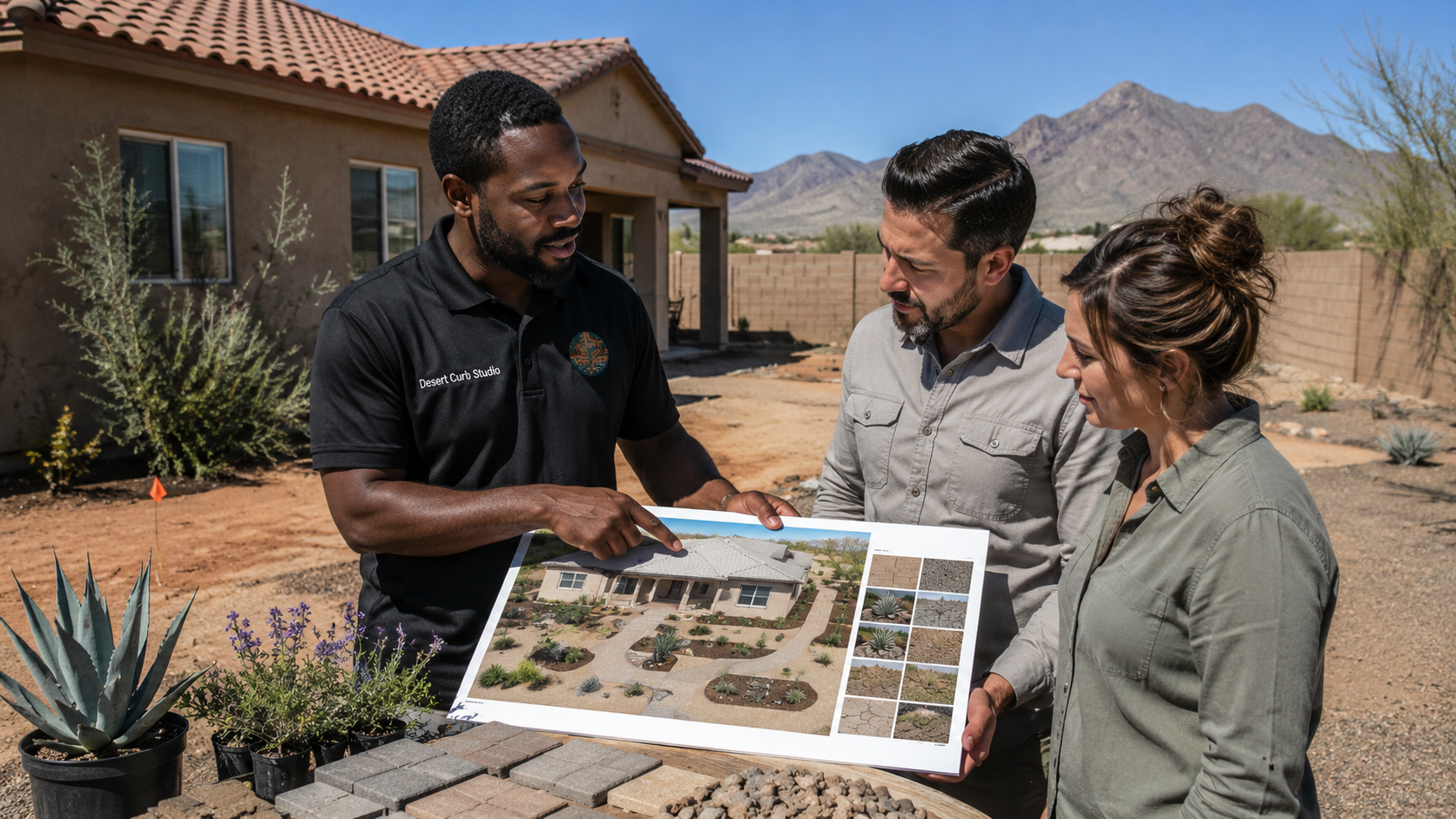
Arizona yards come with their own design challenges.
The sun is intense.
Shade matters.
Plant choices matter.
Too much hardscape can feel hot.
Too little planting can feel barren.
Too much planting can feel cluttered or high-maintenance.
A yard can easily look flat if everything sits at the same height with gravel, small shrubs, and no strong focal point.
That is why visual planning is so helpful here.
For an Arizona front yard, a concept might explore a stronger entry sequence, desert planting, boulder accents, layered heights, clean gravel zones, and lighting.
For a backyard, it might show a more livable outdoor space with seating, shade, turf, trees, fire features, or a cleaner patio layout.
The right concept helps the yard feel designed for the desert, not just filled with desert materials.
You Still Need a Good Installer
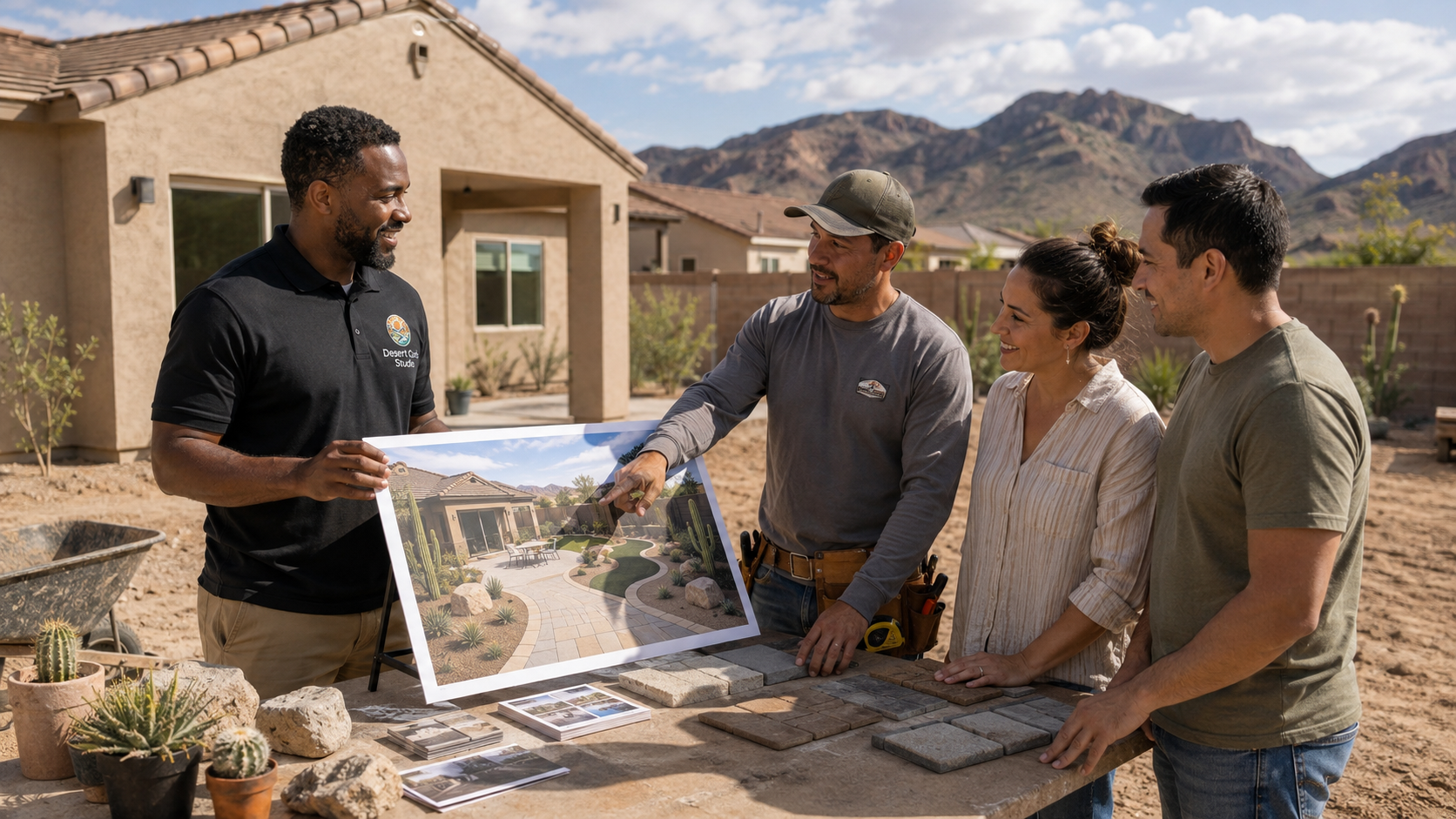
Starting with a concept does not mean skipping the landscaper.
It means going to the landscaper with a clearer plan.
A good installer is still important for pricing, construction details, drainage, irrigation, grading, materials, scheduling, and actual installation.
The concept simply helps you understand what you want before the construction conversation begins.
Think of it like remodeling a kitchen.
Most people would not want a contractor to start tearing things out before they have some idea of the layout, cabinets, colors, counters, and overall look.
Your yard deserves the same level of thought.
Start With the Vision, Then Build the Plan
Before you hire a landscaper, give yourself the chance to see the yard’s potential.
Not as a vague idea.
Not as a Pinterest board full of disconnected inspiration.
Not as a contractor estimate you are trying to visualize in your head.
But as a clear design concept that shows what the space could actually become.
Once you can see the direction, everything gets easier:
The installer conversation gets easier.
The budget conversation gets easier.
The material decisions get easier.
The phasing gets easier.
And most importantly, you are less likely to spend thousands of dollars on a yard that still does not feel right.
Want to See Your Yard’s Potential Before Hiring a Crew?
If you are thinking about improving your front yard, backyard, or outdoor living space, a design concept can help you see the possibilities before you commit to installation.
At Desert Curb Studio, I create visual yard concepts that help homeowners explore layout, planting, shade, lighting, and curb appeal direction before spending money on a crew.
You do not have to have everything figured out yet.
That is the point.
Start with the vision first.
See your yard’s potential before hiring a crew.